What It Costs
New London's median year built sits at 1968, a good 13 years ahead of the broader service area's 1981 median. That gap matters for panel pricing because doors from the late 1960s often used narrower panel sections and different hinge spacing than the 1980s stock that makes up most of the surrounding towns on our route. A single-panel swap on a door this age sometimes runs higher than a newer door simply because we're matching a less common width, not because the labor is harder. We quote after we see the door in person - panel pricing without an actual measurement is a guess, and we don't like quoting guesses to people 20 miles out.
Household income in New London runs lower than the wider area's $66,250 median, and we keep that in mind when we lay out options: sometimes one replaced panel gets you another decade out of a door, and sometimes it's cheaper over time to plan for the whole door later. We'll tell you which situation you're in rather than upsell a full replacement when a panel will do the job.
Why This Fails Locally
Doors installed around 1968 in this part of Texas typically came with steel panels thinner than what manufacturers use now, and many were never repainted or resealed over the decades. That thin, older steel dents easier and rusts faster at the seams, especially where panels overlap near the bottom section. When one panel on a door like this gets hit - a trailer, a trash can, a bike - the damage often doesn't stay contained to that panel. The track alignment on these older doors is less forgiving of a dented section, so you can end up with a door that binds on the rollers even though only one panel actually got hit.
We also see mismatched replacement panels from past repairs, where someone installed whatever panel was on hand instead of matching the original. On a door built in 1968, finding an exact style match isn't always possible, and we'll say that upfront instead of promising a seamless color match we can't deliver.
How Long It Takes
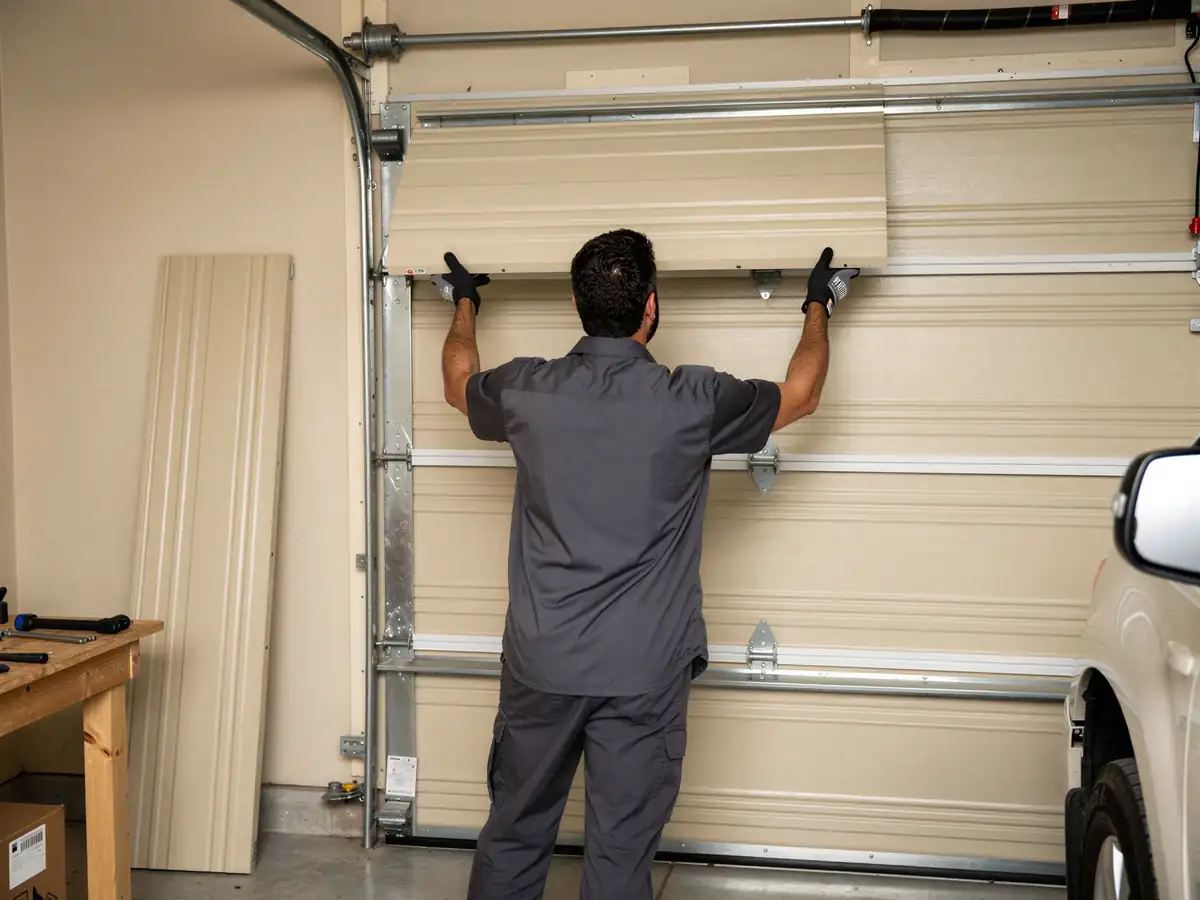
A straightforward single-panel swap is usually a same-visit job once we're on site with the right panel in the truck
The longer lead time is sourcing the panel itself - for a door this old, we're not always pulling from a shelf of current stock, and that can add days before we can schedule the install. We'll tell you at the quote stage whether your panel is a common size we can grab quickly or a style we need to special-order.
Because New London is about 20 miles out from our Longview base
We schedule the drive around other jobs on that side of the service area rather than making a single trip for one panel. That keeps costs down, but it does mean we're not promising a same-day fix here the way we might be able to closer in.
- 20 miles
What You Are Seeing
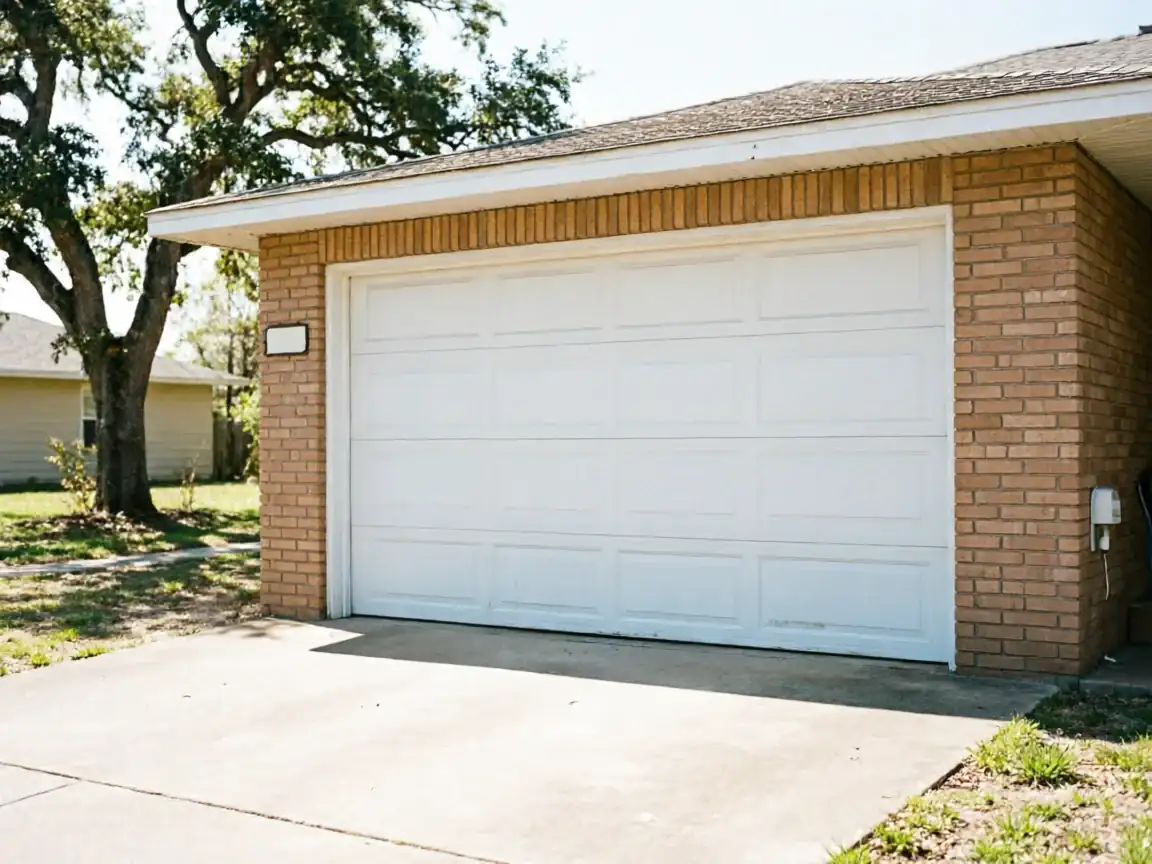
If your door has one section that's visibly bowed, rusted through at the bottom edge, or dented enough that the door catches on the track when it opens, you're likely looking at panel damage rather than a spring or opener problem. On a door from the late 1960s, rust at the bottom panel is common even without any impact - just decades of ground moisture working on steel that's thinner than today's doors.
A door that drags, scrapes, or needs a shove partway up is also worth a look. Sometimes that's the opener compensating for a warped panel rather than a motor issue, and swapping the panel fixes a problem that looks electrical but isn't.
Doing It Yourself
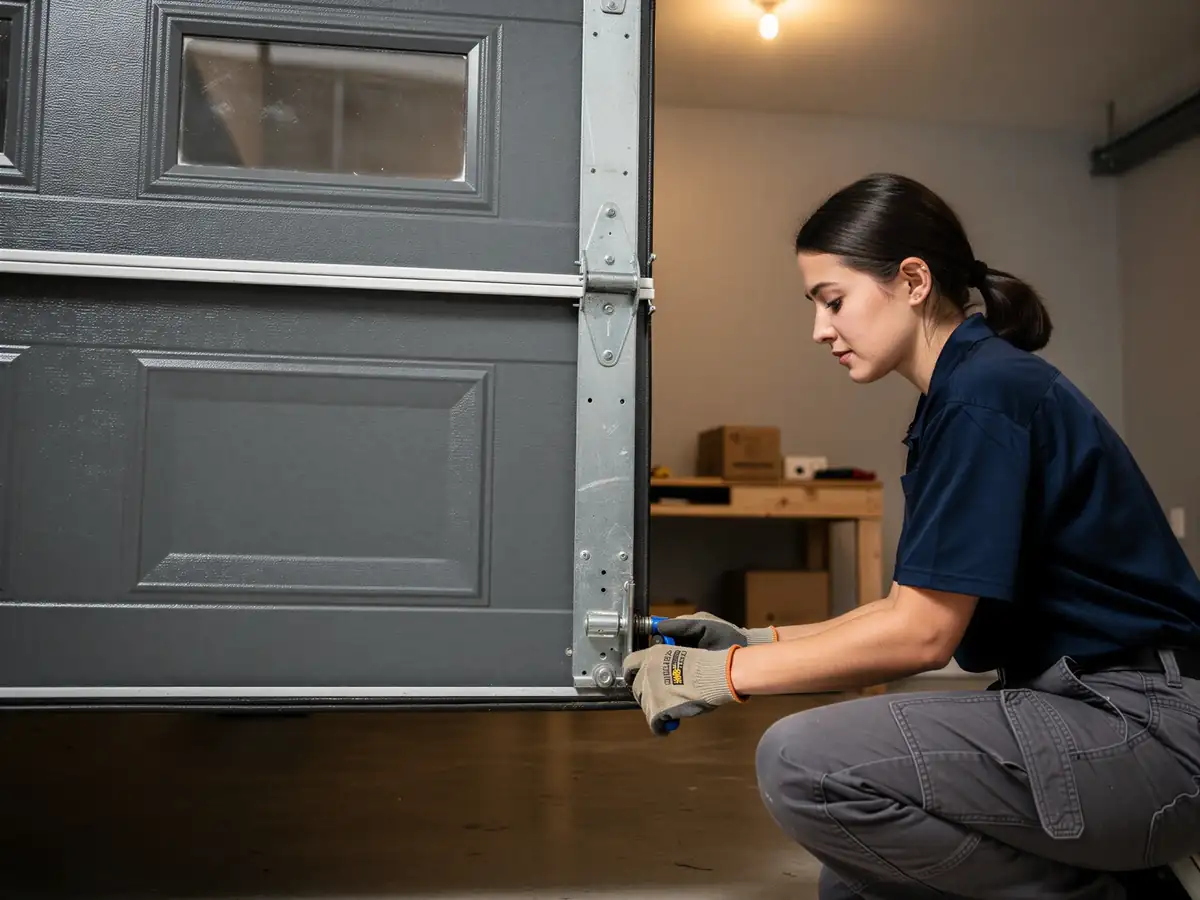
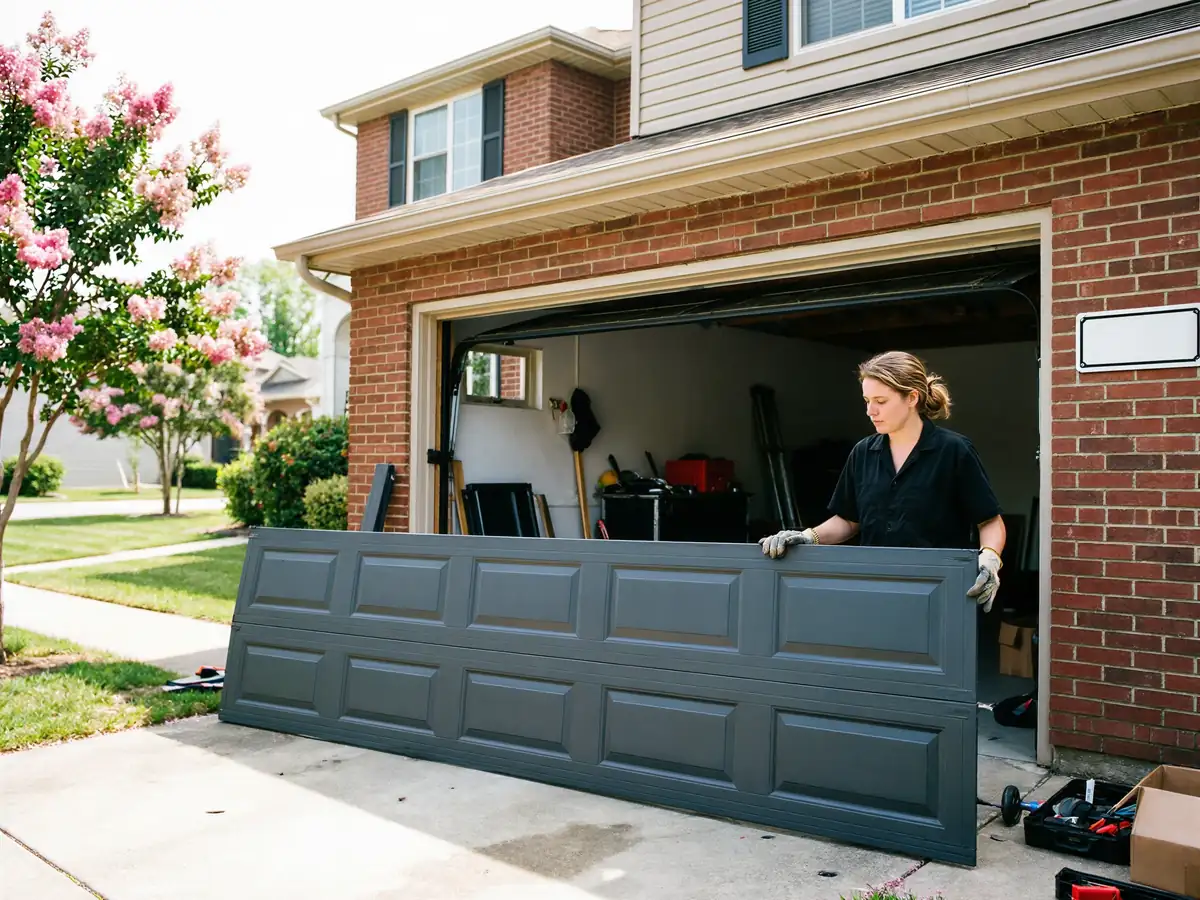
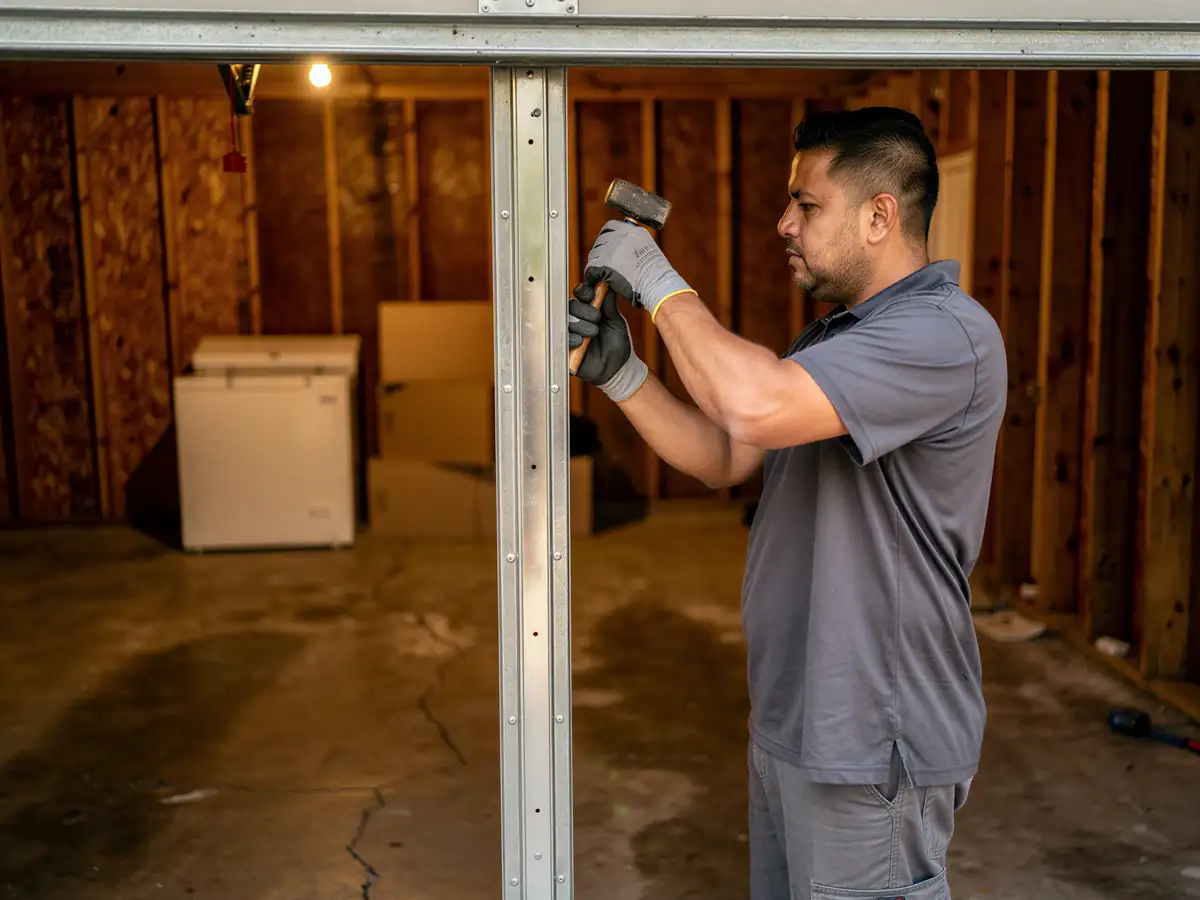
Removing a single panel from a sectional door isn't the hardest DIY garage door job, but matching an exact panel width and hinge pattern on a 1968-era door is where most homeowners get stuck - hardware stores carry current sizes, not what was standard when these doors went in. If you order the wrong width, you'll find out after you've already pulled the old panel and have a door that won't close.
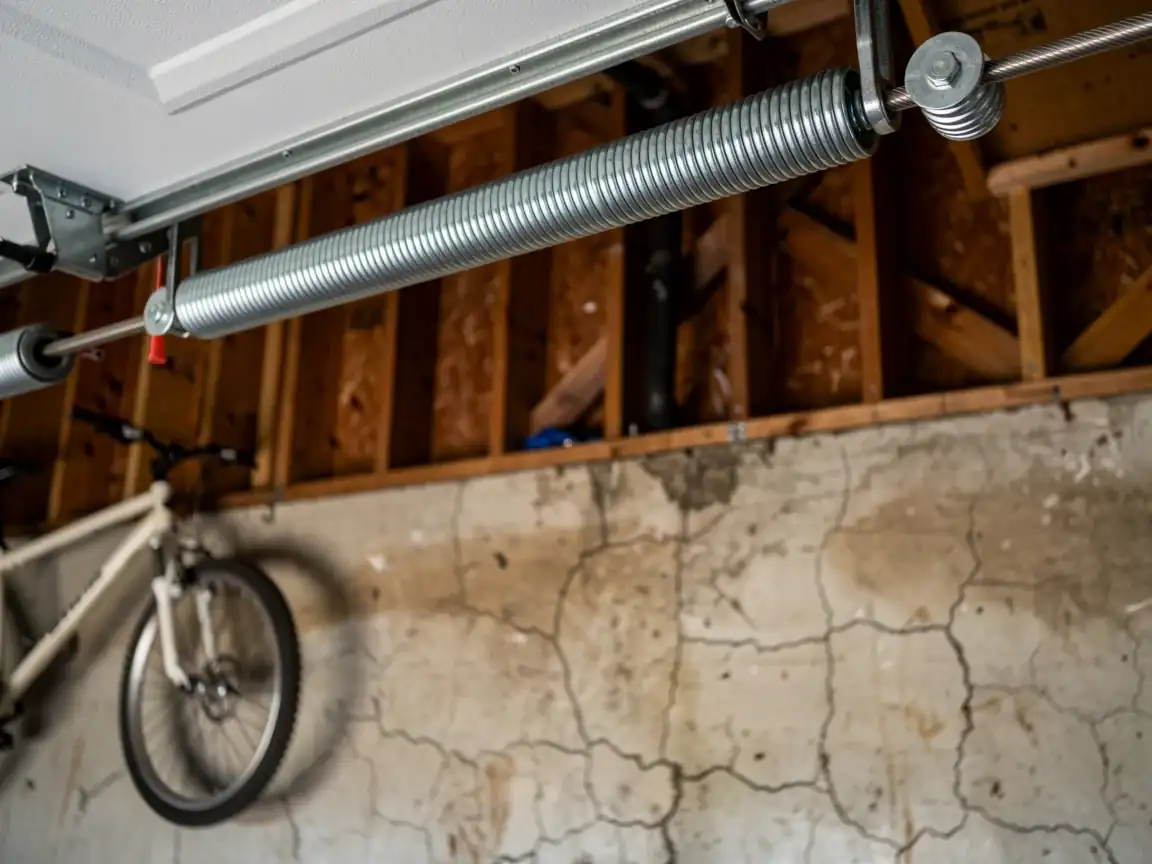
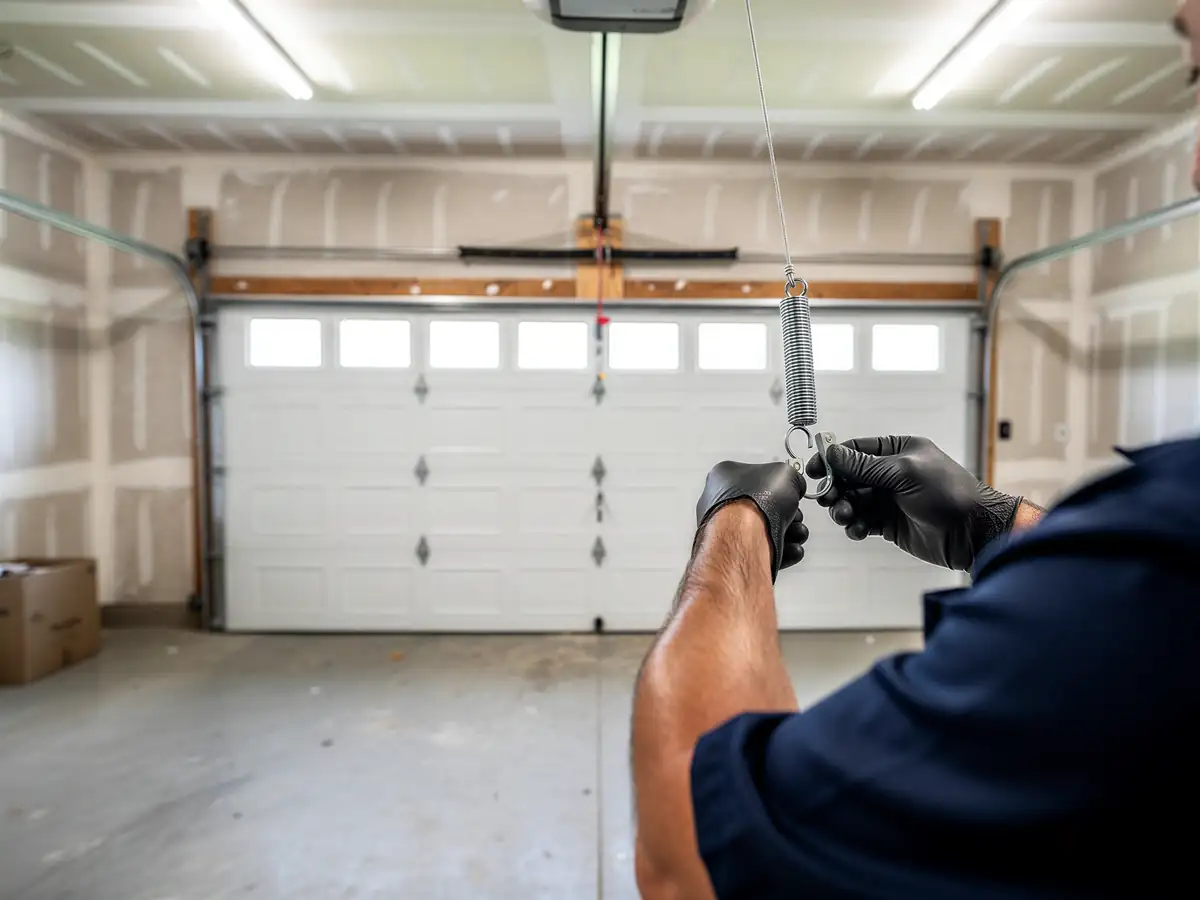
We're not going to tell you it can't be done at home. If you've got the panel in hand and the right tools, a single-section swap is manageable. Where we'd stop you is on torsion spring work near the panel - that's not a DIY repair regardless of the door's age, and it's the one part of this job we'd rather you call us for than attempt alone.