Serving Longview, TX & nearby
(903) 205-8234
Longview, TX

What That Noise Is Actually Telling You

A rattle isn't always nothing. In Longview's 1968-1994 housing stock, specific sounds point to specific worn parts. Here's what each one actually means.

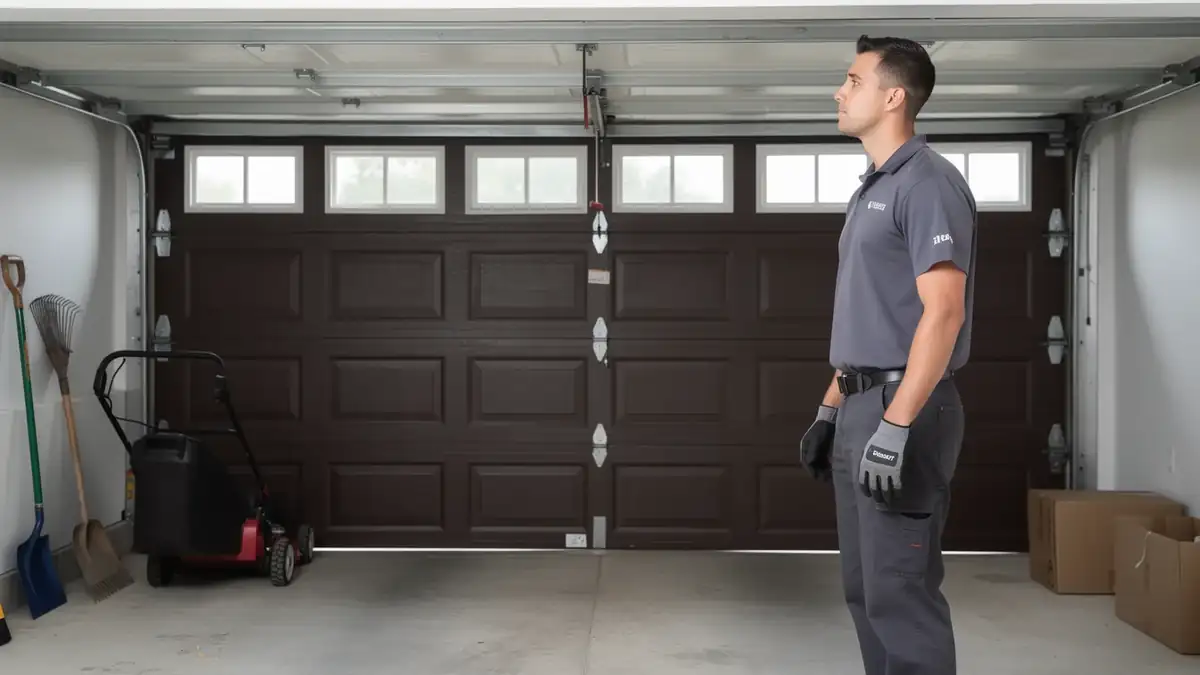
A technician stands in a garage looking at a closed brown garage door.

What to Check

Start with where the sound happens, not just what it sounds like. A bang or pop right as the door starts to move is almost always a spring, not the opener - on the original torsion hardware common in homes built here between 1968 and 1994, that spring has had decades to fatigue. A rhythmic squeak every few feet as the door travels is usually a roller, and on houses from that same build era, those rollers are often still the steel ones that came with the house, not nylon. A grinding or scraping noise, especially near the top of the track, points to a bent section or a bearing plate that's worn loose. A loud slap right as the door seats on the slab is the bottom seal hitting concrete - check whether it's torn, flattened, or just loose on the retainer. None of this requires taking the door apart. Stand next to it, run it up and down twice, and note exactly where in the cycle the sound happens. That single detail - beginning, middle, or end of travel - tells a tech more than a description of the sound itself ever will.

The Problem

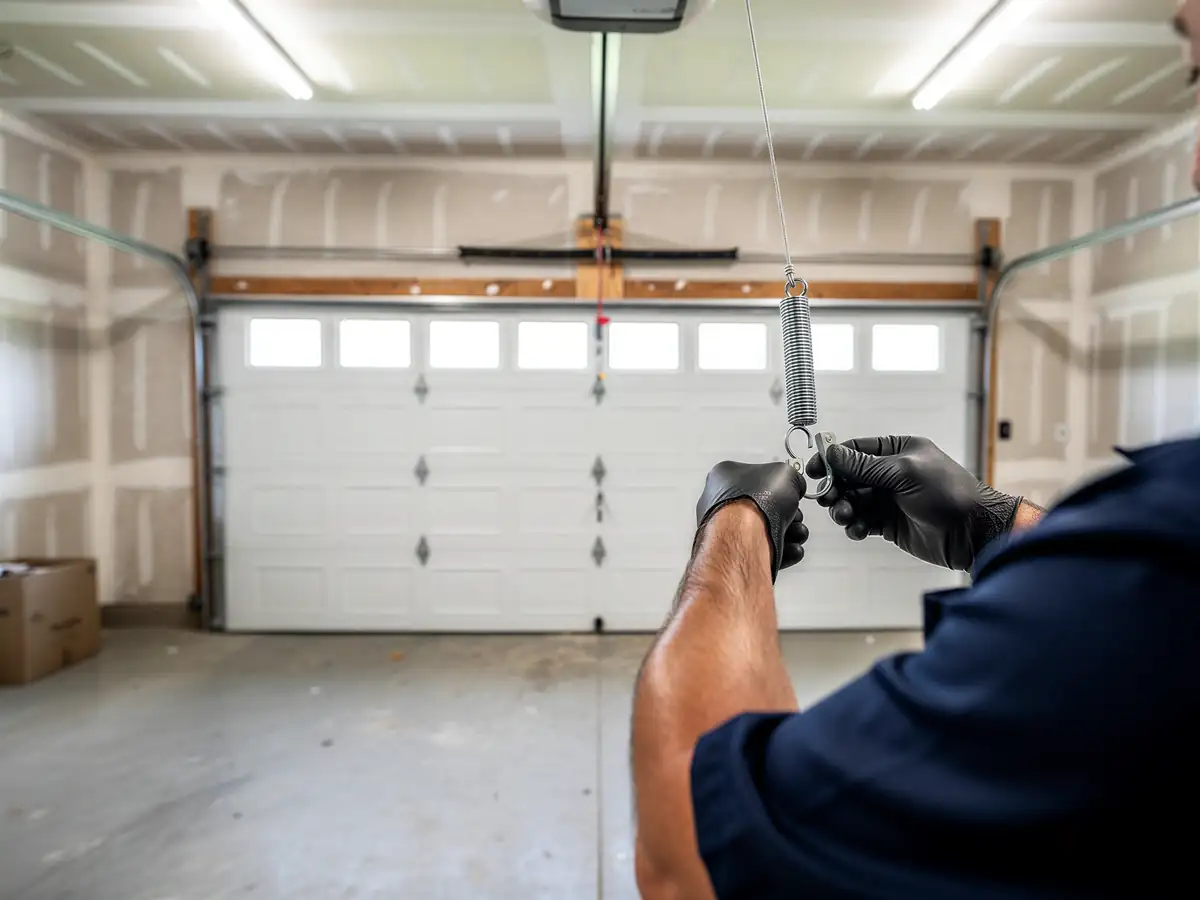
Torsion springs are rated for a number of open-close cycles, not a number of years, but age still matters because most of the springs on doors built in this area's 1968-1994 window were installed once and never touched again. A spring that's done 20,000 cycles over 35 years is closer to the end of its life than one that's done the same number over 10 years, because the steel itself fatigues with time and exposure, not just use. Across the service area - White Oak, East Mountain, Clarksville City, Lakeport, Kilgore, Gladewater, Liberty City, Hallsville, Gilmer, Ore City, and New London - housing clusters in that same 1980s-90s stock, which means a lot of hardware out there is approaching or past its working life at roughly the same time. A noise that shows up now, on a door that's been quiet for years, often isn't a new problem. It's an old part finally announcing it's close to done. Catching that sound before the spring lets go matters, because a spring failure under load can damage the opener or drop the door hard.

What Most People Get Wrong

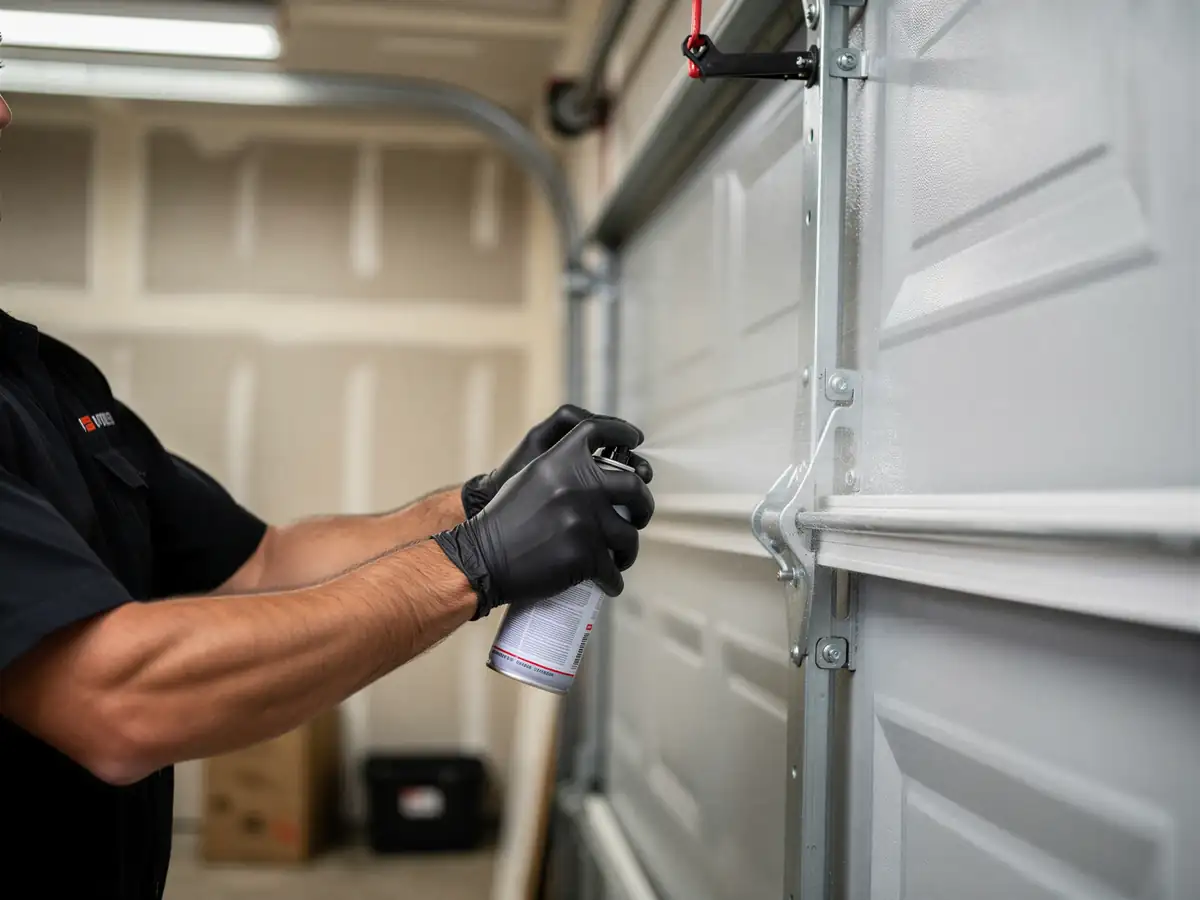
The most common mistake is spraying WD-40 on a squeaky roller or hinge. WD-40 is a solvent, not a lubricant - it cleans the part and then evaporates, so the squeak comes back worse within a week because you've stripped whatever grease was left. A white lithium grease or a silicone-based garage door lubricant actually stays put. The second mistake is assuming every noise is the opener's fault, since that's the part people can see move. On houses from this area's typical 1968-1994 build period, the opener is often newer than the track and spring hardware, having been replaced once already, while the original rollers and hinges are still in service. So the grinding you hear isn't the motor struggling - it's a 40-year-old roller riding a worn track. We won't pretend every noise needs a service call. If it's a dry hinge, a five-dollar can of the right lubricant and five minutes will fix it. Call when the noise is a bang, a grind that doesn't quiet down after lubrication, or anything that changes how the door moves, not just how it sounds.

What the Weather Here Does to It

This area sits in a moderate-heat climate, and that matters more for garage door noise than most owners expect. Steel track expands as temperatures climb through a summer afternoon, and on a track that's slightly out of alignment to begin with - common on original 1968-1994 hardware that's shifted a little over the decades - that expansion is enough to turn a quiet rattle into a knock you can hear from the driveway. The same heat dries out rubber weatherstripping and bottom seals faster than in a cooler climate, which is why that slapping sound at the bottom of the door often shows up or worsens in the hotter months even though nothing mechanical has changed. Lubricant behaves differently too - grease that felt right in cooler weather can thin out and run off moving parts faster when the garage itself heats up. None of this means the heat is breaking your door. It means the heat is exposing wear that was already there, usually on parts that have been doing their job quietly since the house was built.
How it works

From “it’s stuck” to “it’s fixed”

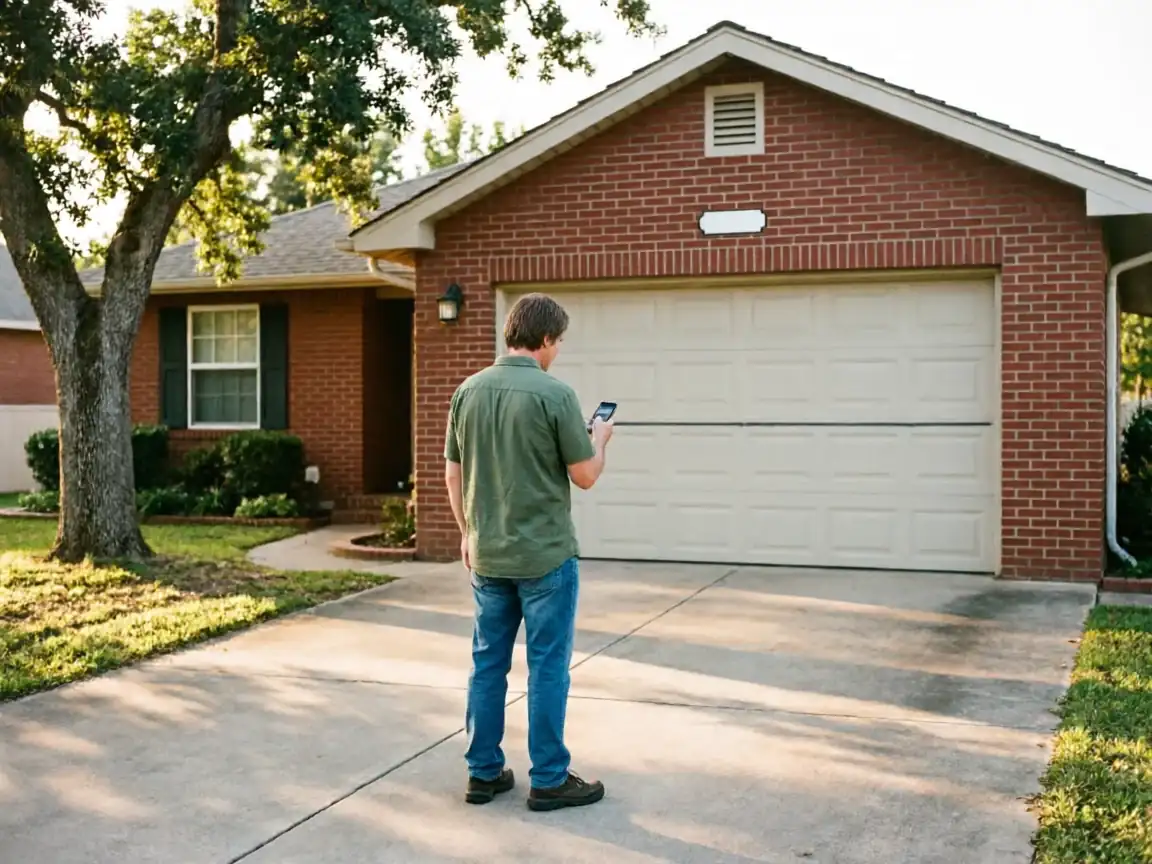
A man stands in a driveway, looking at his phone in front of a garage door.

Tell us what’s wrong

Describe the symptom - won’t open, loud bang, opener runs but the door won’t move.

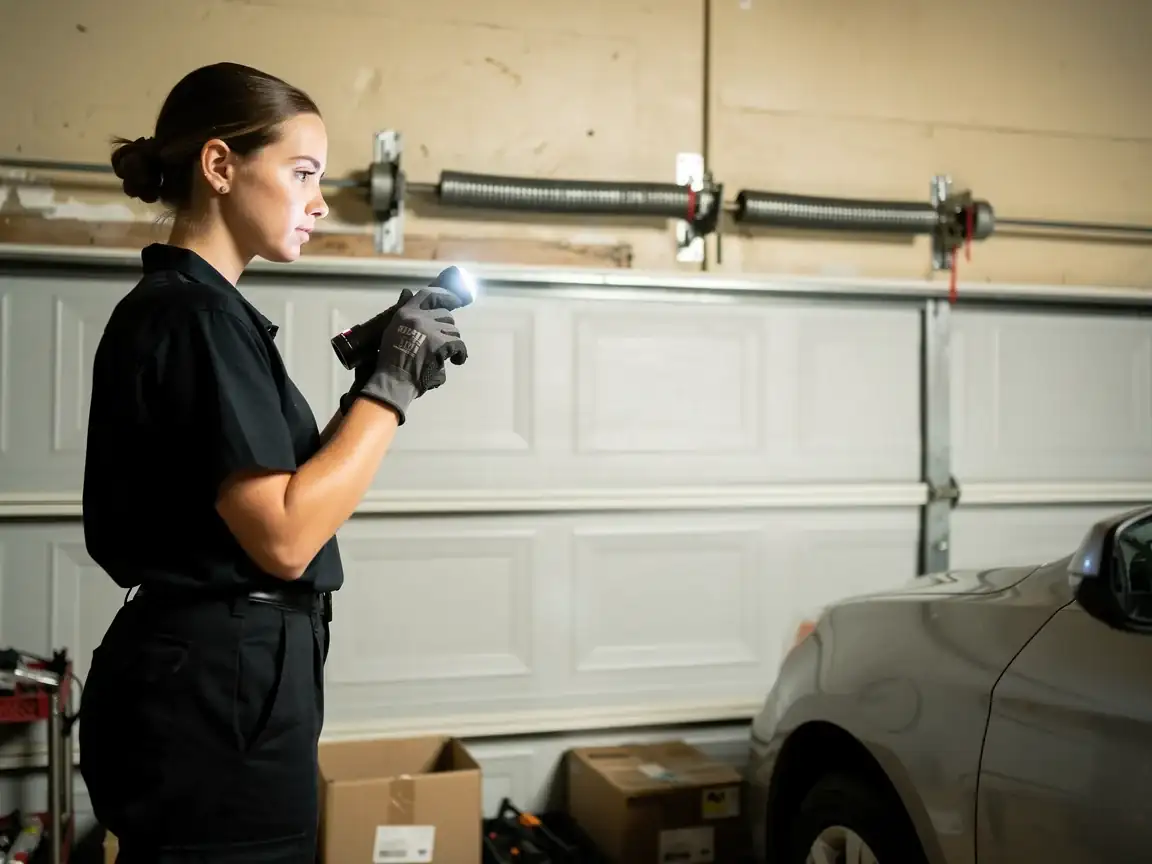
A technician in a black uniform holds a flashlight, inspecting a garage door and torsion spring.

On-site diagnosis

A technician tests the door under power and by hand and finds what actually failed.

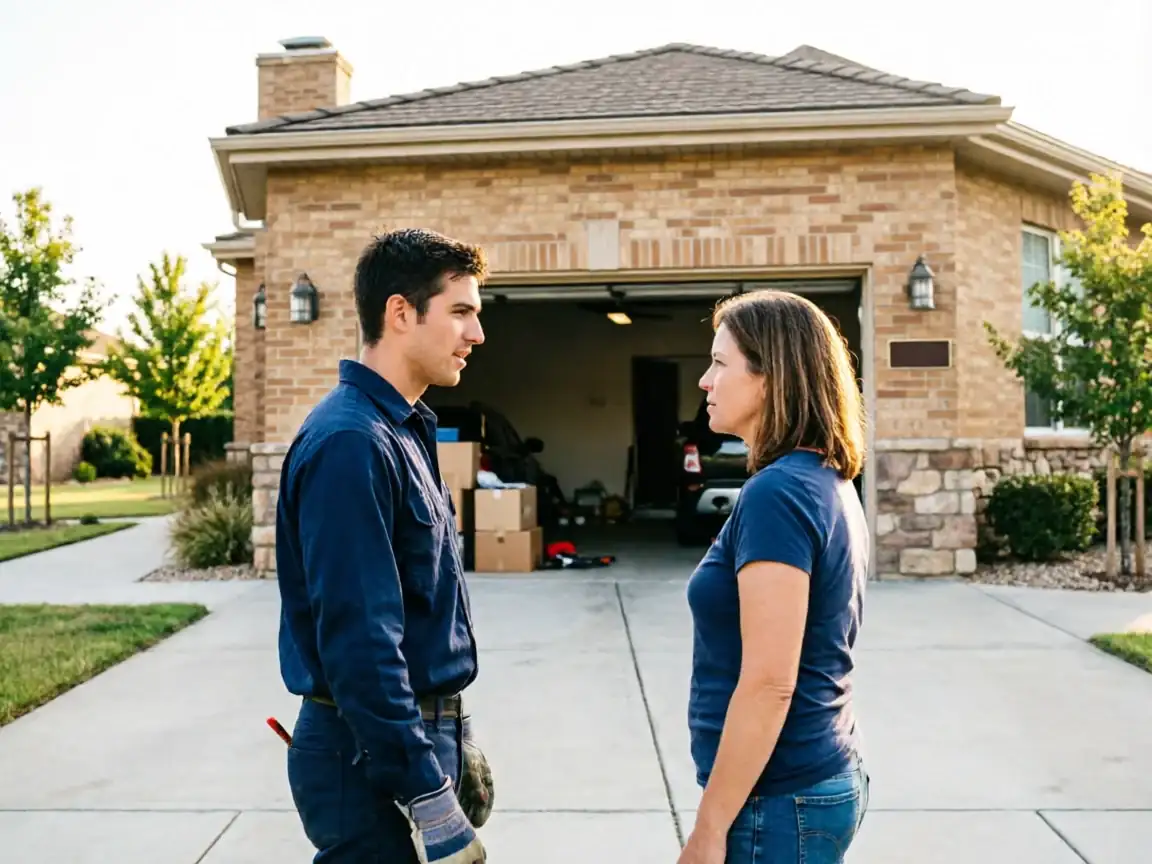
A technician and a woman stand facing each other in a driveway in front of a house.

Clear, up-front plan

You get the fix that’s needed and what drives the cost - before any work starts.

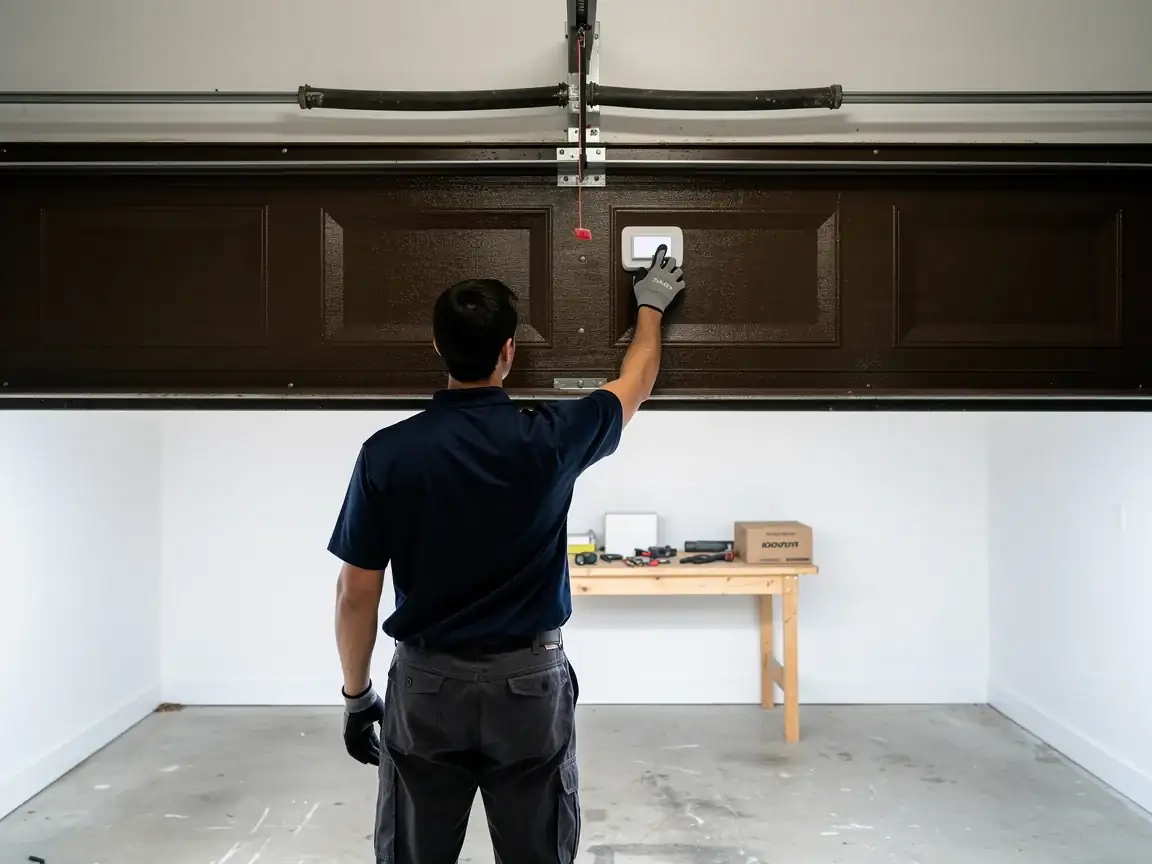
A technician adjusts a control panel on a brown garage door.

Repaired & tested

The repair is done, the door is set true and tested, and the work area left clean.

Not sure which repair your door needs in Longview, TX? Describe what it’s doing - every job starts with a diagnosis.

How we work

What to expect

Diagnosis firstEvery visit starts by finding what actually failed - not a pre-written parts list.
The right part for the doorSprings and openers matched to the door’s weight and age, so the fix holds up.
Straight answersWhen a repair makes more sense than a replacement - or the reverse - you hear it plainly.
Clean, careful workTension released safely, hardware set true, the door tested under power before we leave.
What we do

Garage Door Services

Repair and installation work for Longview homes and businesses.

Questions

Frequently asked

Straight answers about garage door repair in Longview. Still unsure? Ask us directly.

My door makes a loud bang when it starts to open. Is that dangerous?

Usually it's a torsion spring, and yes, treat it as urgent. A spring under tension that's close to failing can let go suddenly, and if it does while the door is moving, the door can drop hard or damage the opener trying to compensate. Stop using the door and get it looked at before running it again.

Why does my door get noisier in the summer?

Heat makes steel track expand and dries out rubber seals faster, which is common in this area's moderate-heat climate. If the track was already a little out of alignment or the hardware is original to a house built decades back, that expansion turns a minor rattle into a noticeable knock during the hotter months.

Can I just lubricate it myself before calling anyone?

Yes, and you should try that first for squeaks. Use a silicone or white lithium garage door lubricant on the rollers, hinges, and track - not WD-40, which evaporates and leaves the part dry again within days. If the noise is a bang, grind, or doesn't improve after lubrication, that's when it's worth a call.

Ready to get your garage door sorted?

Tell us what it’s doing and where you are in Longview - we’ll take it from there.

Request a QuoteCall