What It Costs
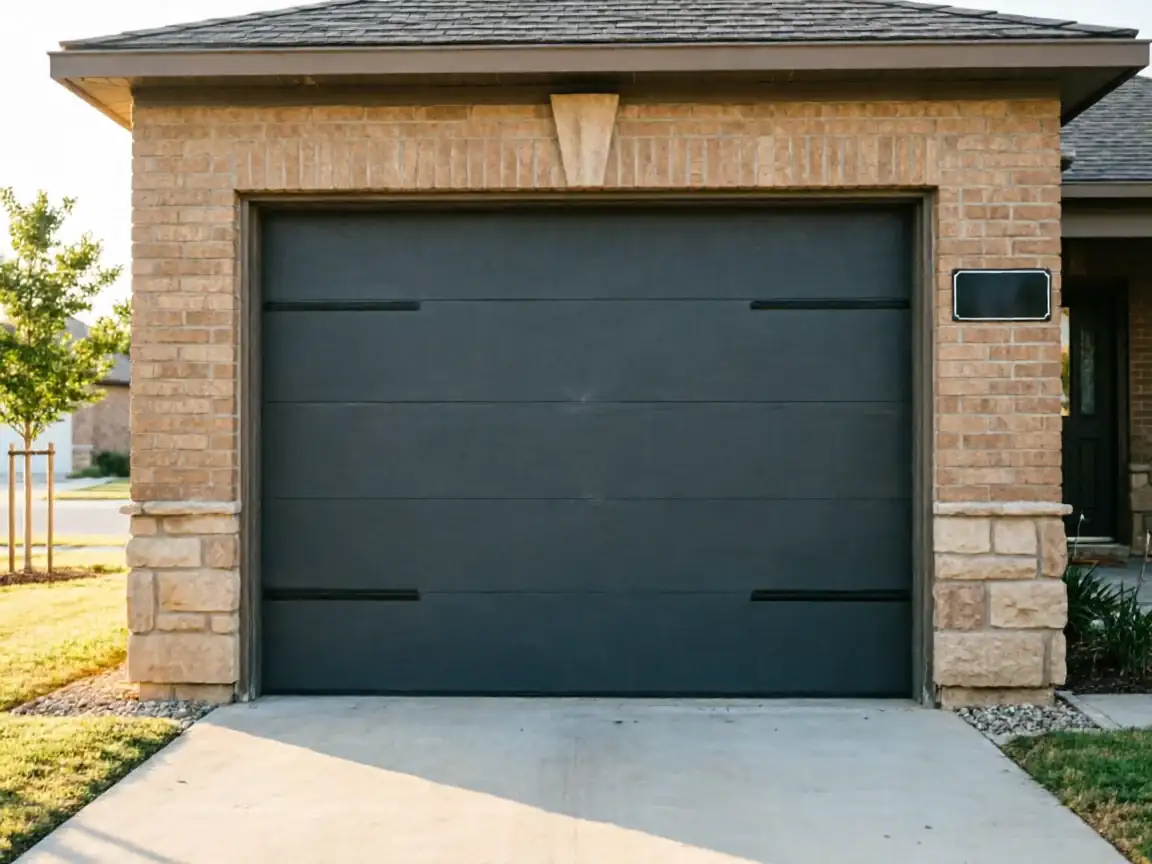
New London's median home was built around 1968, a good 13 years ahead of the area-wide median of 1981. That matters here because a door that old is almost never riding on factory-original track anymore - it's been bent back into shape at least once, maybe twice, by a previous owner with a rubber mallet and no idea what he was doing. Each of those fixes changes the math on what a proper repair costs.
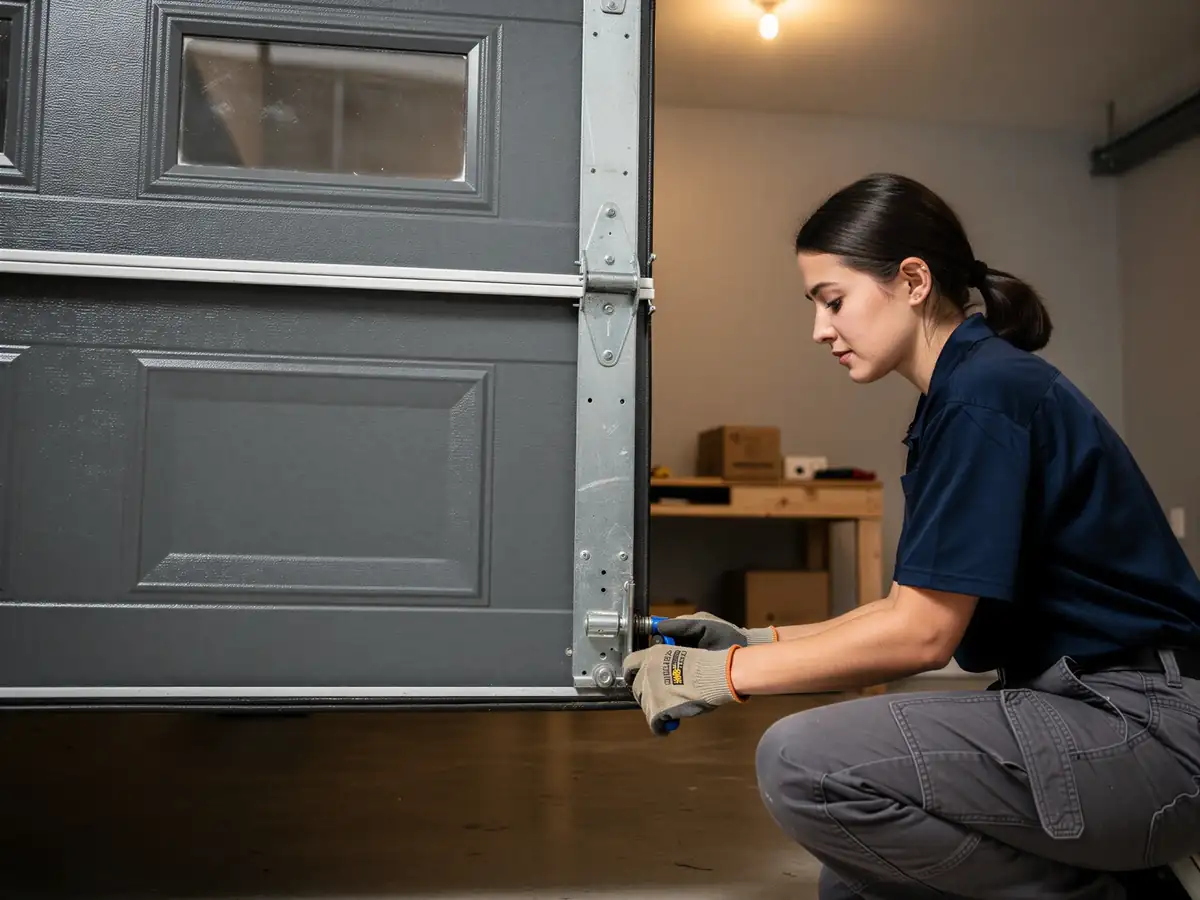
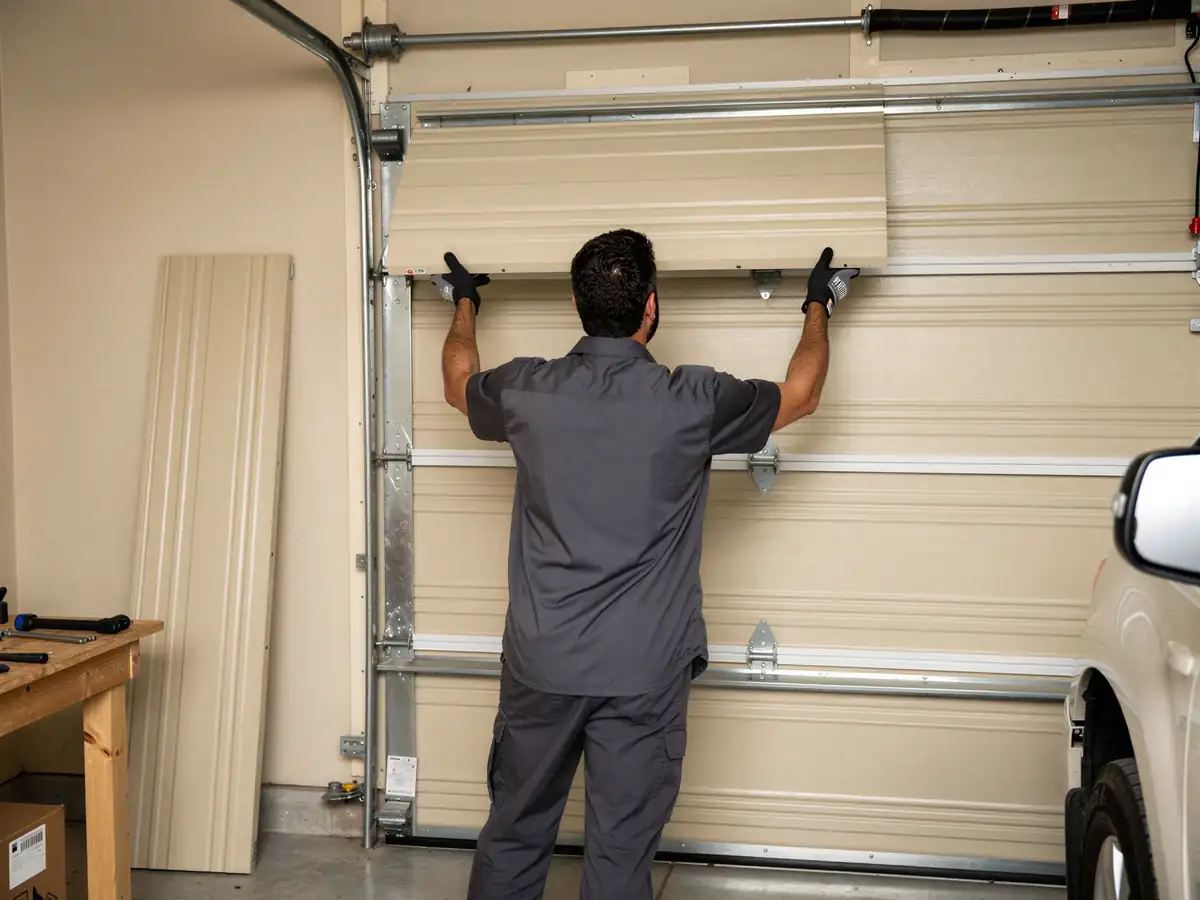
Straight track realignment on a door that's only popped one roller is the cheap end of the job. A door that's been off-track long enough to bow the horizontal rail, or that's cracked a stile hitting the jamb, moves into bent-track replacement, which runs more because the section has to come down. With New London's median household income at $50,909 - well under the $66,250 area median - we tell people straight when a $200 realignment makes more sense than a $600 section swap, and when it doesn't.
We're coming from Longview, 20 miles out, so we quote the job itself, not a stop-in fee folded into a "diagnostic." You get one number for parts and labor once we've looked at the track.
Honest limit: if the track is rusted through at the mounting brackets, which happens on doors this old, we're not patching that - it gets replaced, not hammered straight.
Why This Fails Locally
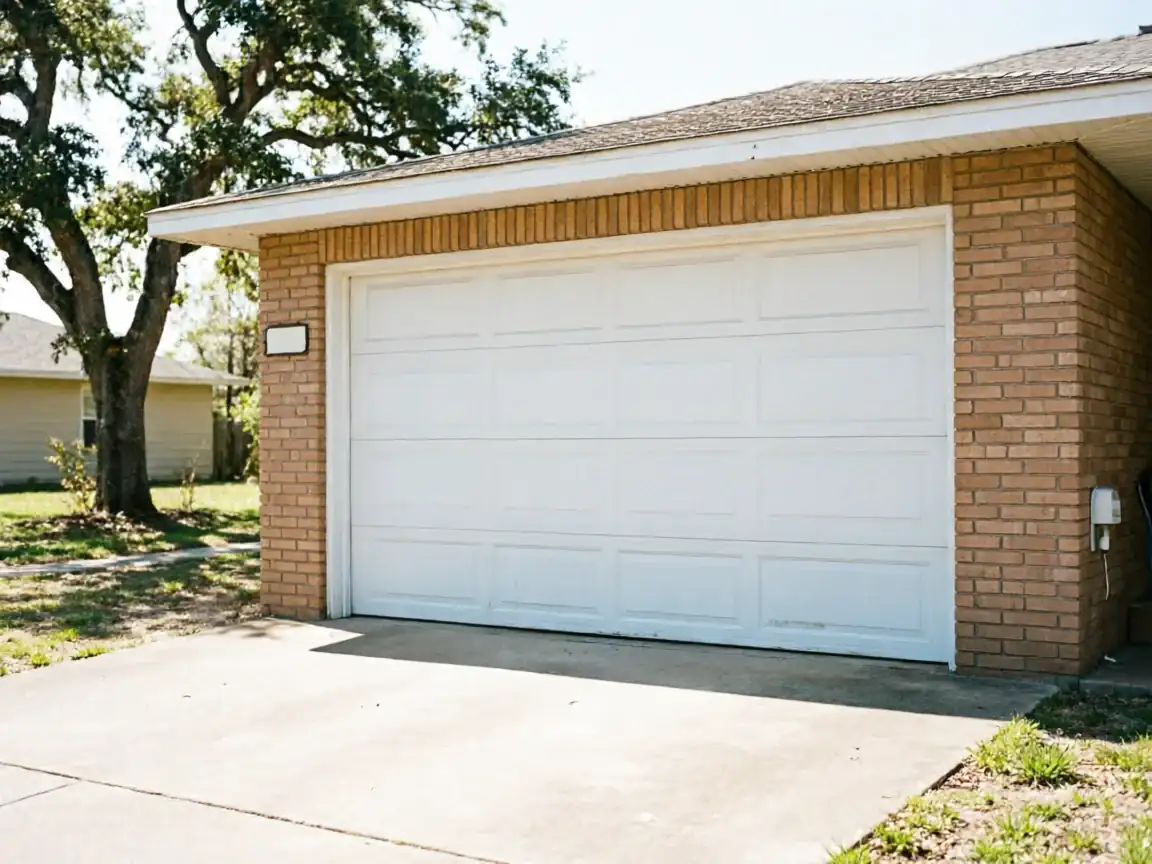
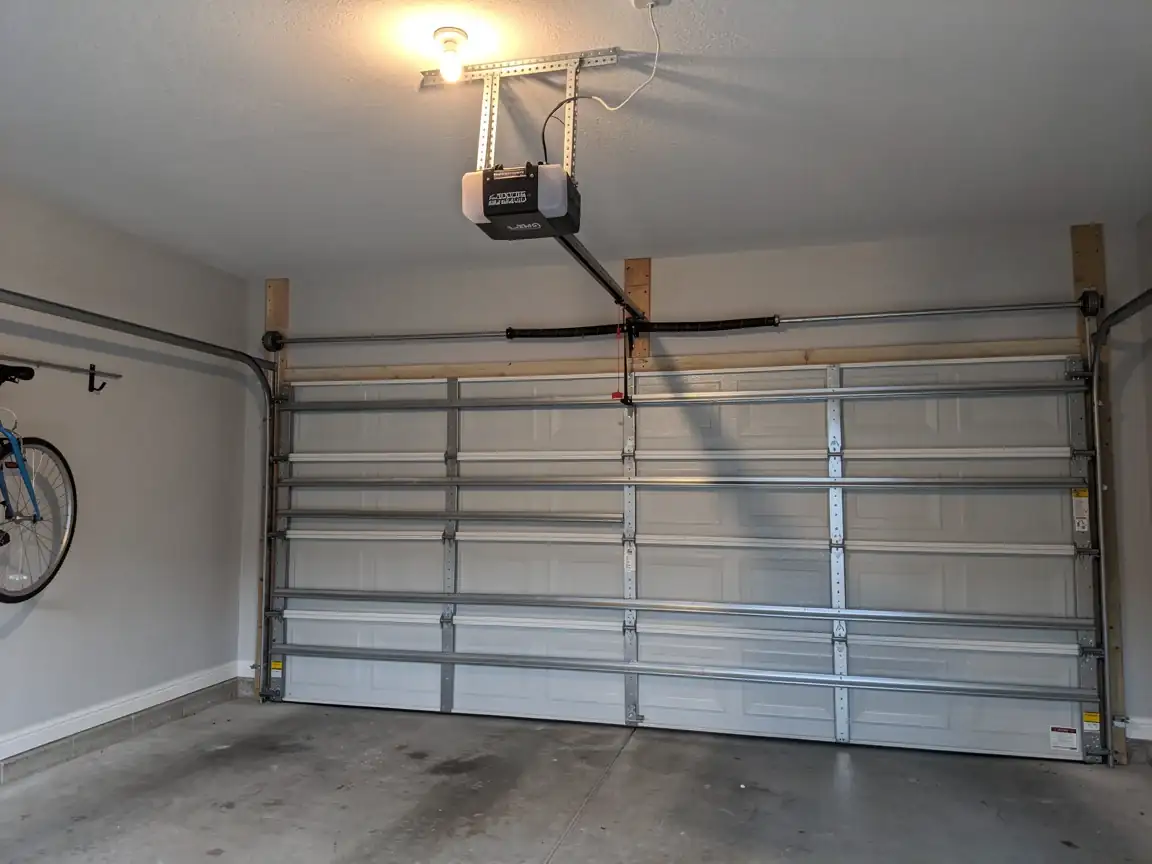
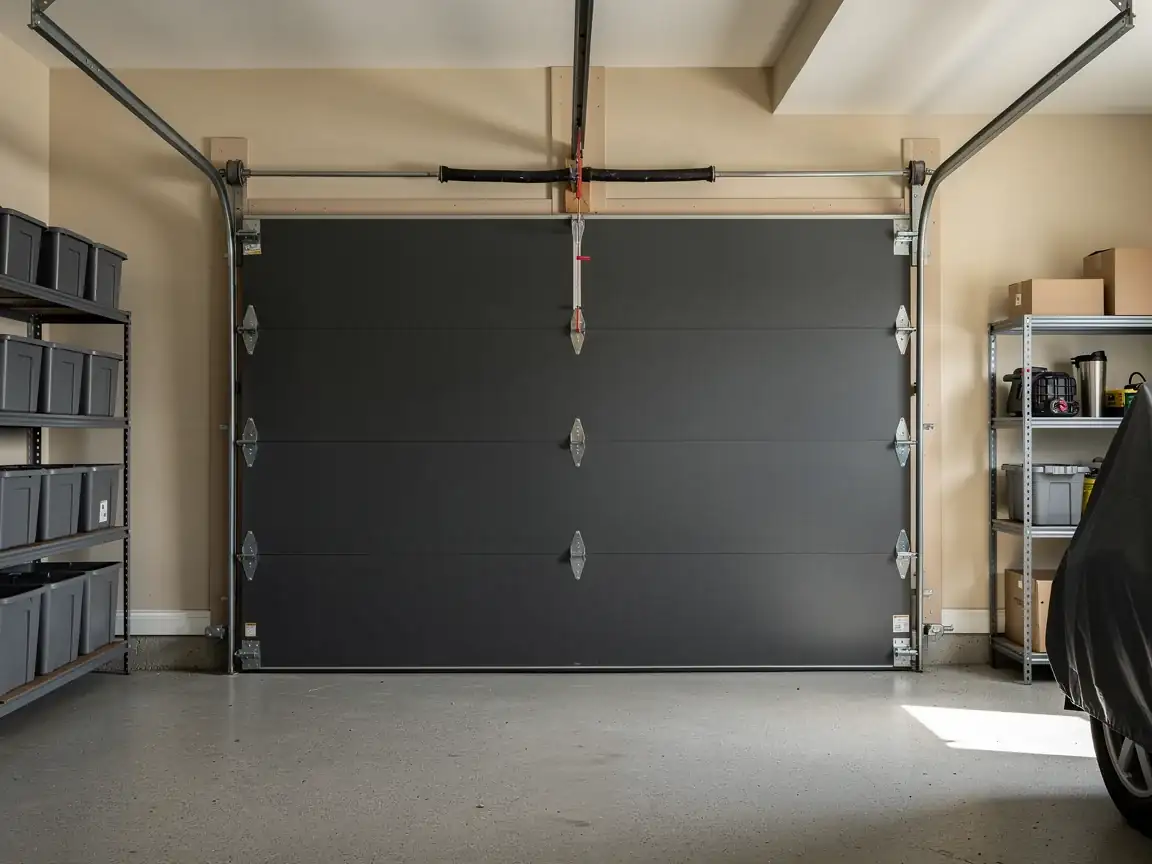
A door built in the 1968 window is usually a single steel panel section design, lighter gauge than what's sold today, hung on track that was sized for that lighter door and nothing heavier. Over 50-plus years, homeowners in this part of the service area have swapped openers, added insulation kits, or hung a second spring without ever checking whether the track could take the new load. That's the first way these doors jump their track - the hardware was never upgraded to match what's riding on it.
The second way is simpler: age. Track brackets on houses this old are often the originals, through-bolted into framing that's shifted over five decades. A quarter inch of drift at the top bracket is enough for a roller to walk off the rail on a cold morning when the steel contracts.
We don't see the kind of extreme heat-cycling faults here that you'd get in a harsher climate band - New London sits in a moderate heat zone - but the age of the housing stock does the damage that weather doesn't.
How Long It Takes
A single-roller pop with the track otherwise straight is usually a same-visit fix once we're on-site
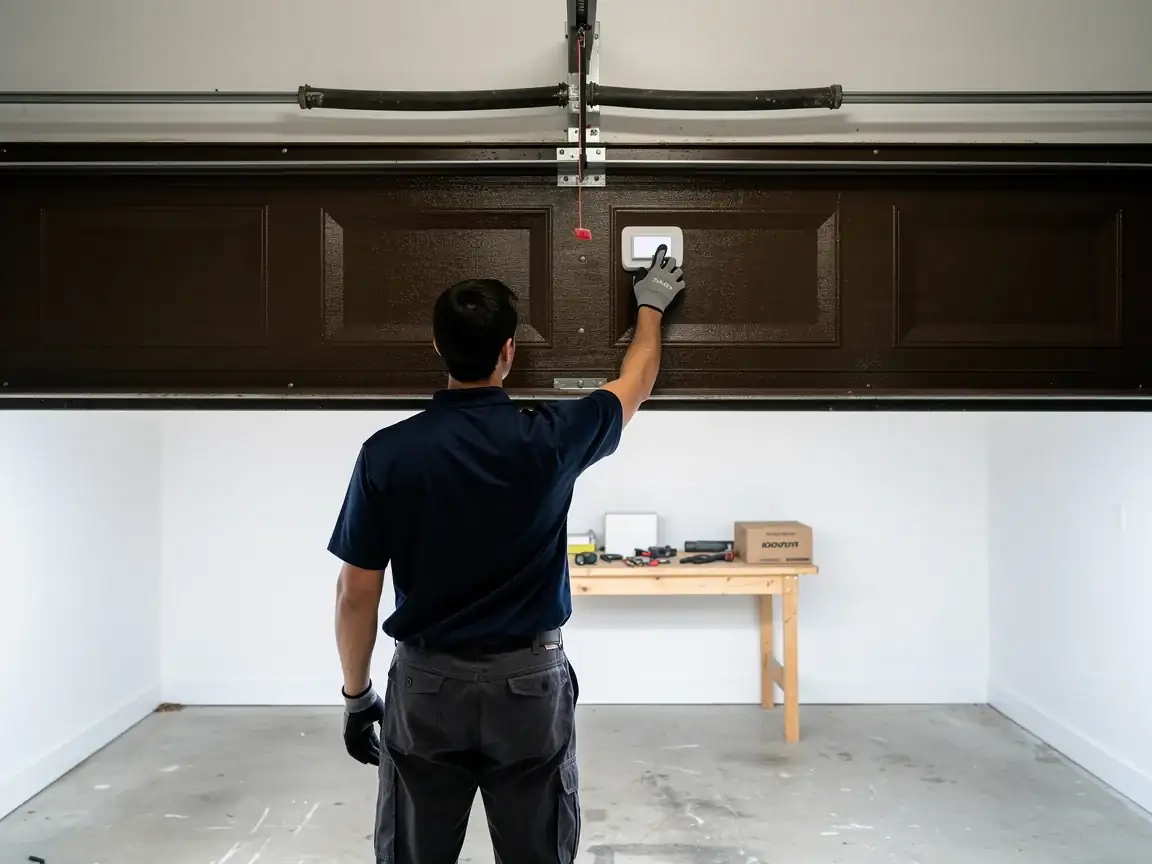
Fifteen to thirty minutes of work. Bent track from an impact, or a bracket that's pulled loose from old framing, takes longer because we're often re-anchoring into wood that's not in great shape after 50-plus years.
Because we're dispatching from Longview, 20 miles away, the drive is part of the window we give you
Not an extra wait once we arrive. We don't keep a crew stationed in New London, so same-day isn't something we promise here - it depends on the day's schedule out of Longview. We'll tell you when we can get there before you commit to anything.
- 20 miles
What You Are Seeing
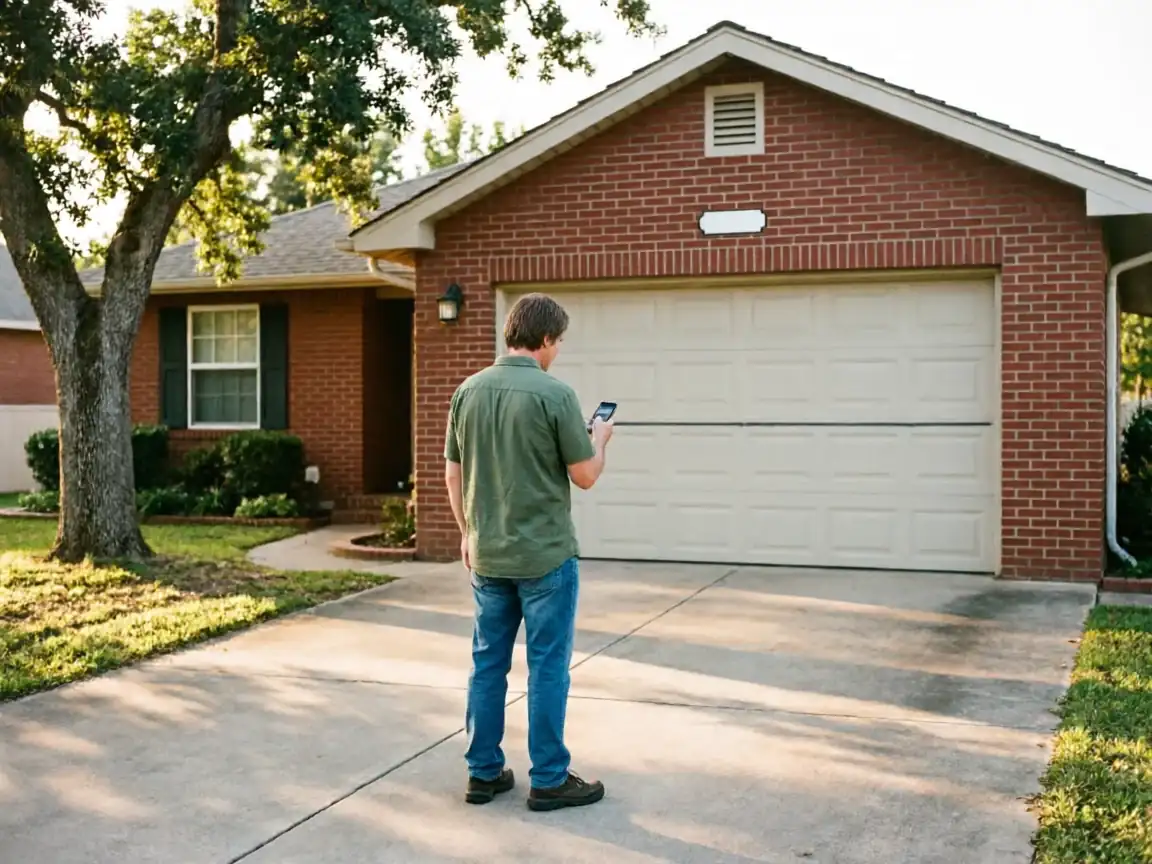
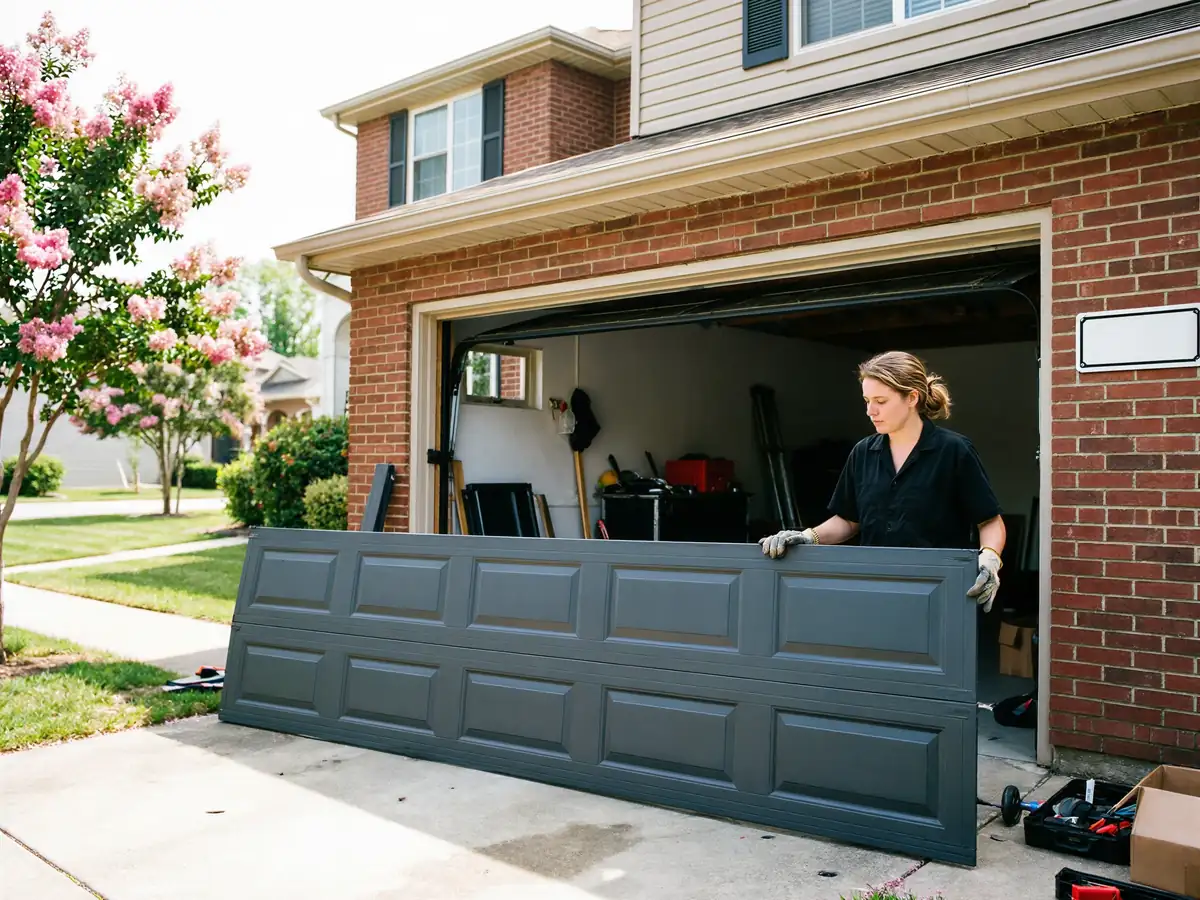
The door sits crooked in the opening, or one side hangs lower than the other. You'll often see a roller sitting outside the track rather than inside it, or the track itself bowed away from the frame at one spot. On the older steel doors common in a neighborhood built around 1968, you may also notice a dent or crease at the exact spot the door caught metal on metal before someone forced it the rest of the way down - don't do that again, it's how a bent stile turns into a cracked panel.
If the opener is still running and grinding against resistance, stop. Running the motor against a jammed track is the single fastest way to turn a $200 fix into a $600 one.
Doing It Yourself
If a single roller has popped free and the track is still straight, you can sometimes walk it back into the channel with the door manually lifted a few inches and the opener disconnected - pull the release cord first. That's about where the DIY line ends for a door this old.
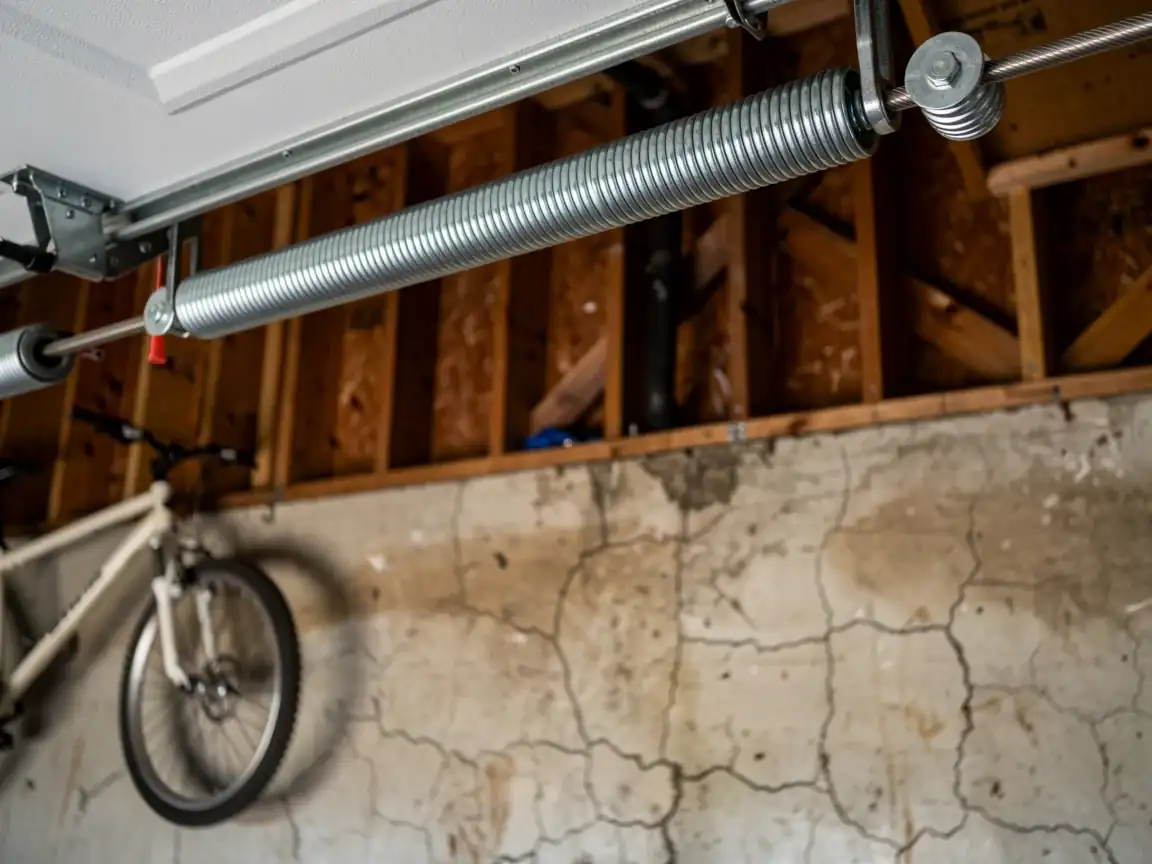
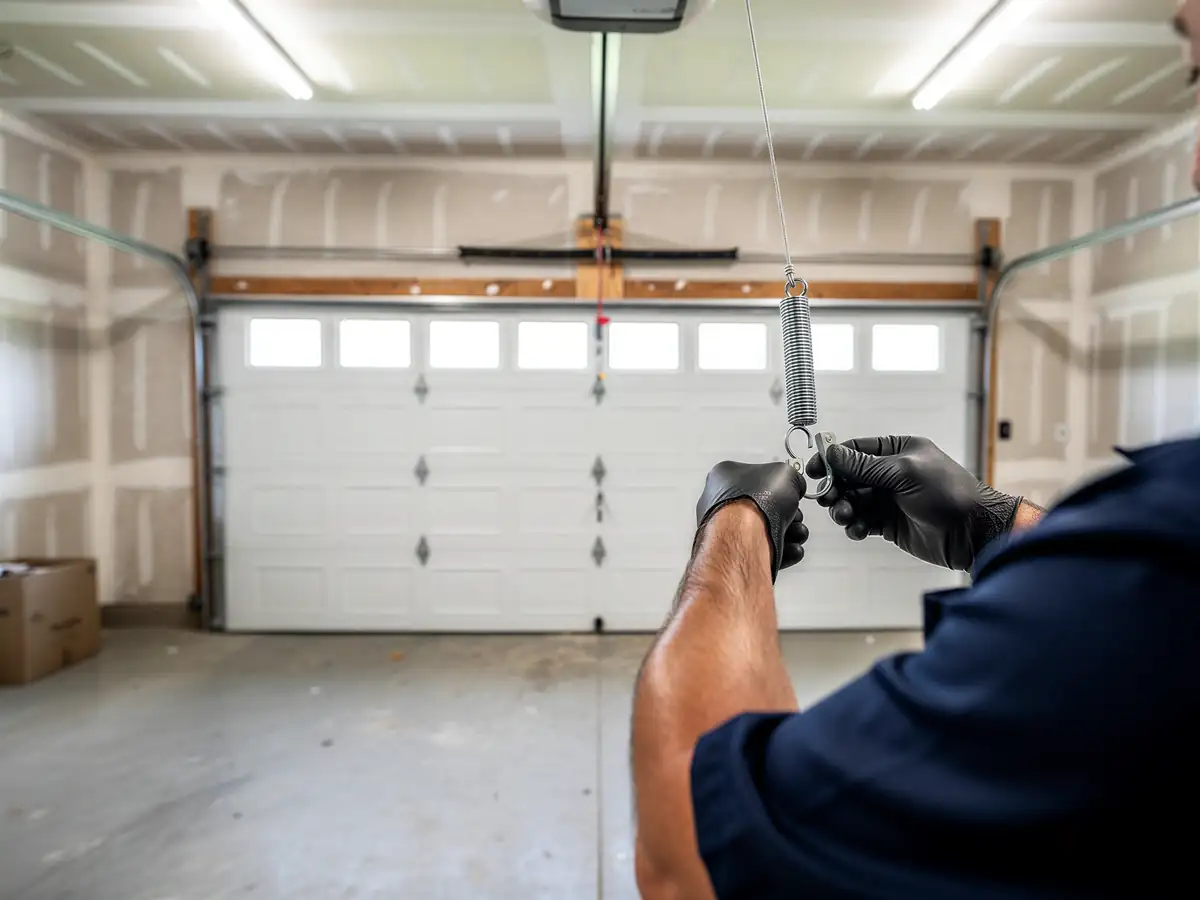
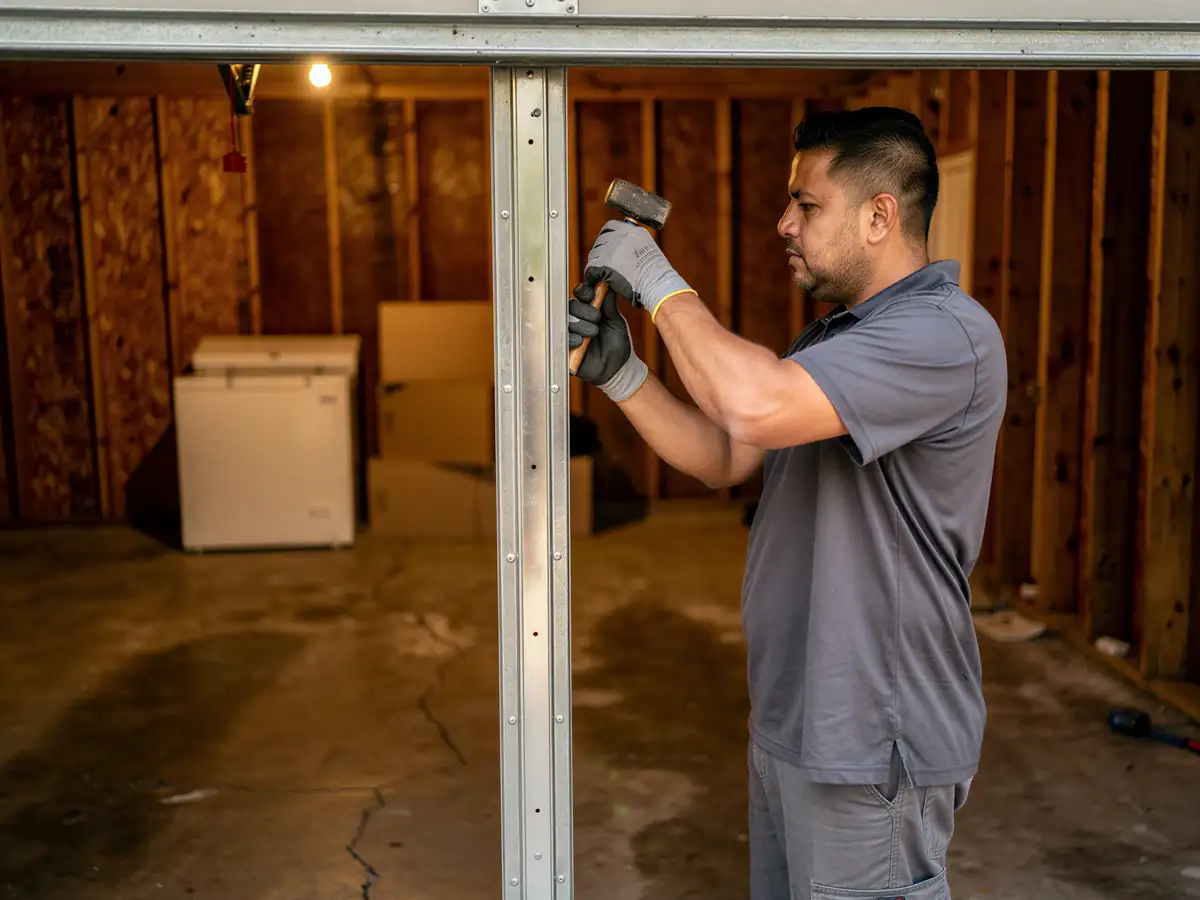
Do not try to bend the track back by hand or with a pry bar. On hardware from the late 1960s, the steel is thinner than what's made today and it work-hardens - bend it twice and it cracks instead of flexing. And never touch the spring. A door this age may still be running its original torsion spring, under the same tension it's held for decades, and that's not a DIY repair under any circumstance.
Stocked Parts
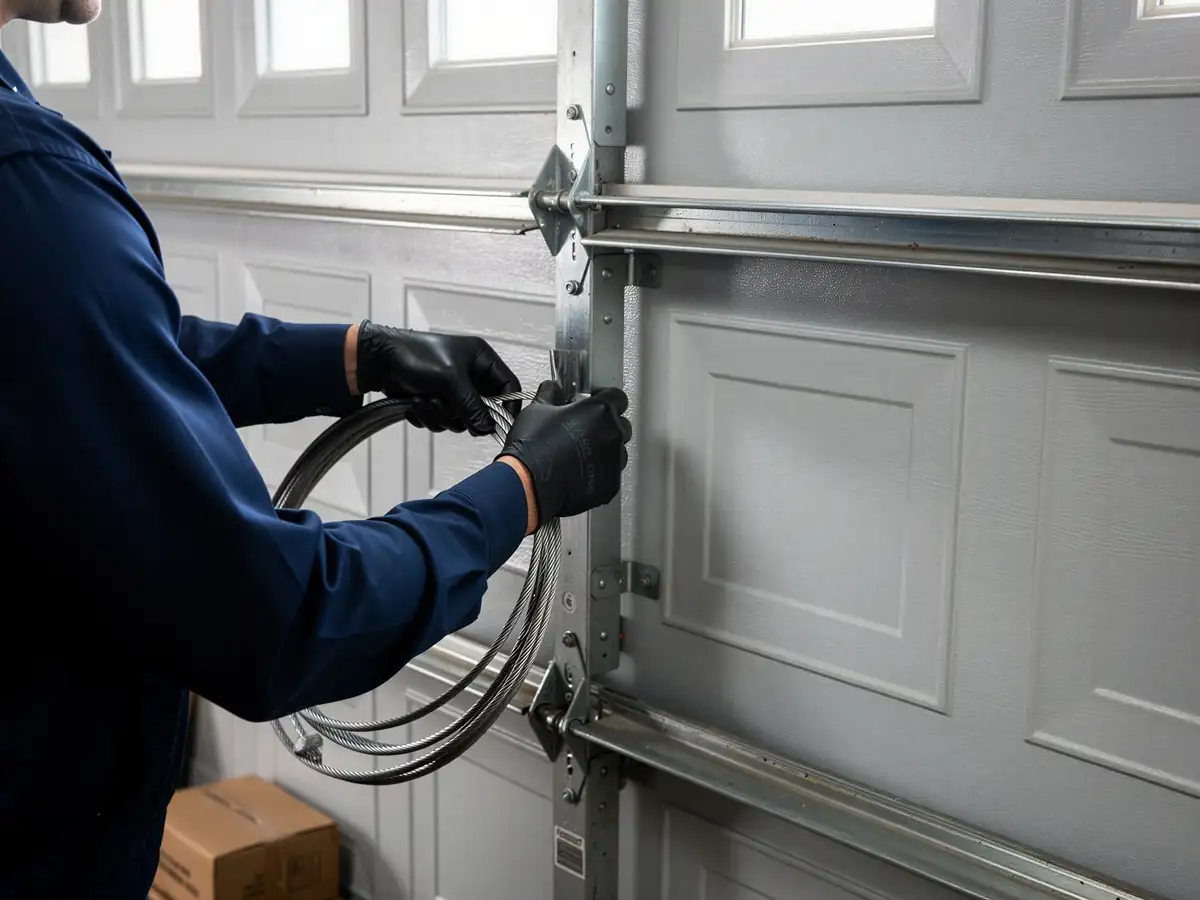
Track and rollers for a standard single or double-car opening are stock items on the truck regardless of the door's age
Those sizes haven't changed much. Where New London's older stock gets us is on bracket hardware: through-bolt mounting brackets sized for the thinner jamb lumber common in houses from that era aren't always the same part number as what's stocked for newer construction, and matching the hole pattern on an original bracket sometimes means a short order delay rather than a same-visit swap.
We carry the common sizes
If your door turns out to need a less common bracket or a panel that's no longer made in that steel gauge, we'll tell you that on-site rather than make you wait to find out.