What It Costs
We don't post a flat number here because what a new door costs depends on the door itself: single or double, steel or insulated, and whether the opener and track need replacing too. What we can tell you is what tends to drive the decision in New London specifically. Median household income here runs $50,909, noticeably under the $66,250 figure for the wider Longview service area. In practice that means more New London homeowners ask us to spec a plain steel door with a basic opener rather than an insulated composite model with a premium drive unit - not because the composite door is a bad choice, but because it's a bigger jump in price for a smaller household budget. We'll walk you through both and let the numbers decide, not a sales pitch. Financing or payment timing questions are worth asking up front, before we order anything, since a custom-width double door isn't a stock item anywhere.
Why This Fails Locally
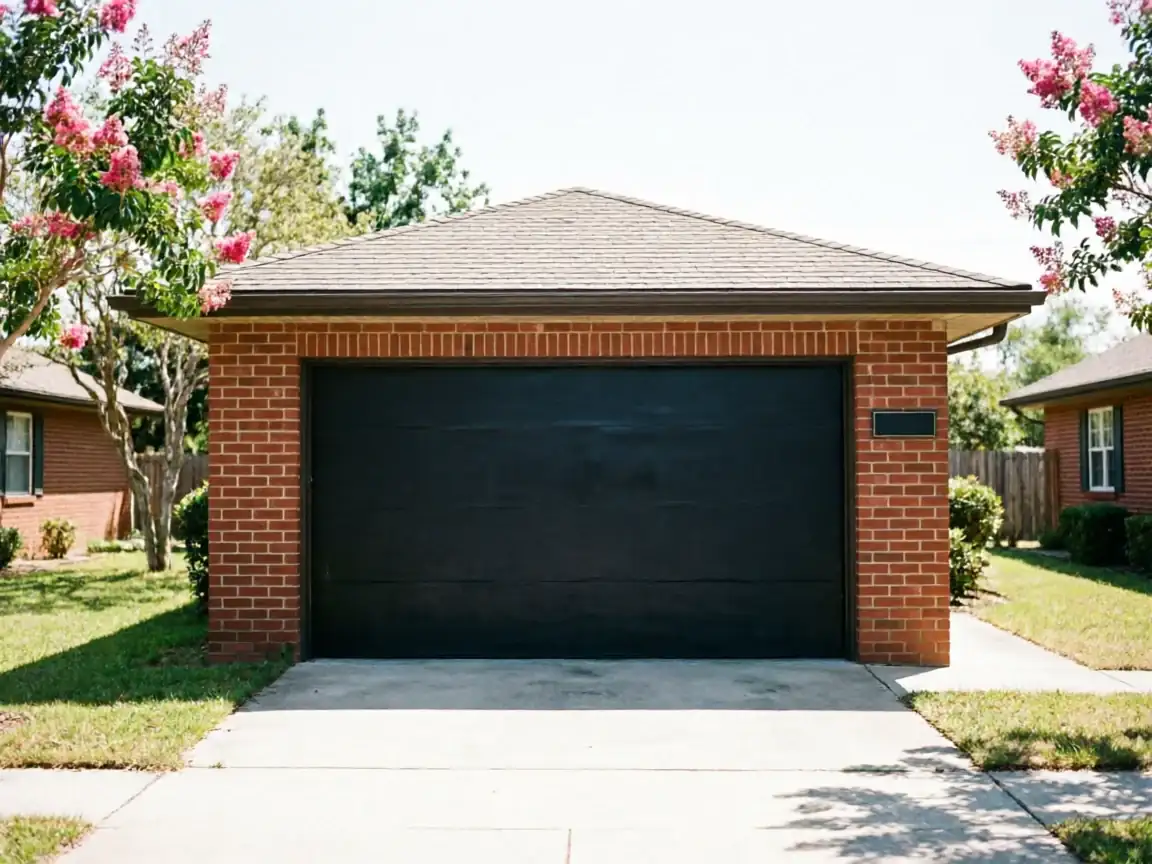
Longview's garage door stock, taken as a whole, mostly went up between 1968 and 1994, with 1981 as the midpoint. New London sits at the older end of that range - most houses here date to 1968 itself, a good thirteen years ahead of the area's typical build year. That matters because a door and track installed in 1968 was built to a different spec than one from the 1980s: narrower rail, lighter-gauge hardware, and in a lot of cases no insulation layer at all. When we replace a door here, we're almost always replacing track and hardware designed for a garage opening that predates modern torsion spring sizing. The moderate heat band this part of Texas sits in also plays a role - steel skins expand and contract through the summer, and on an original 1968 frame that's had decades of that cycling, the opening itself is sometimes slightly out of square. We check for that before we hang anything new.
What You Are Seeing
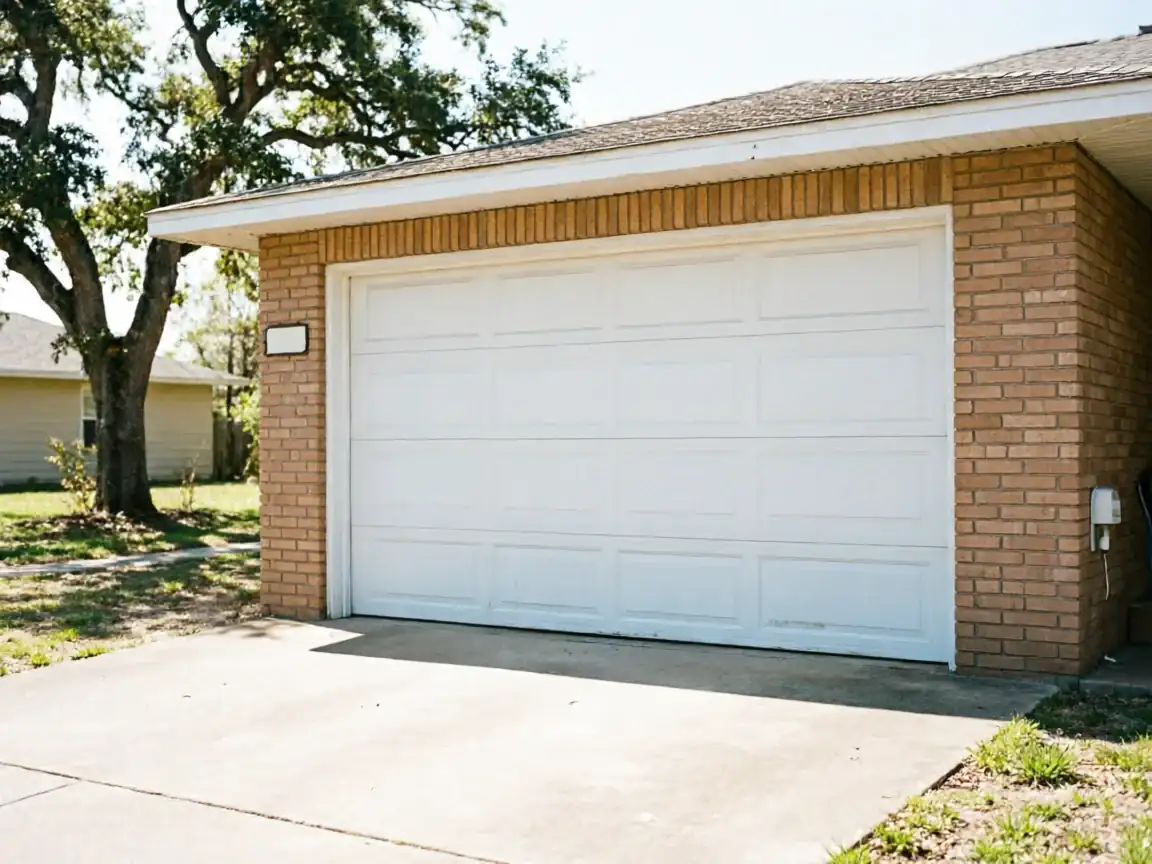
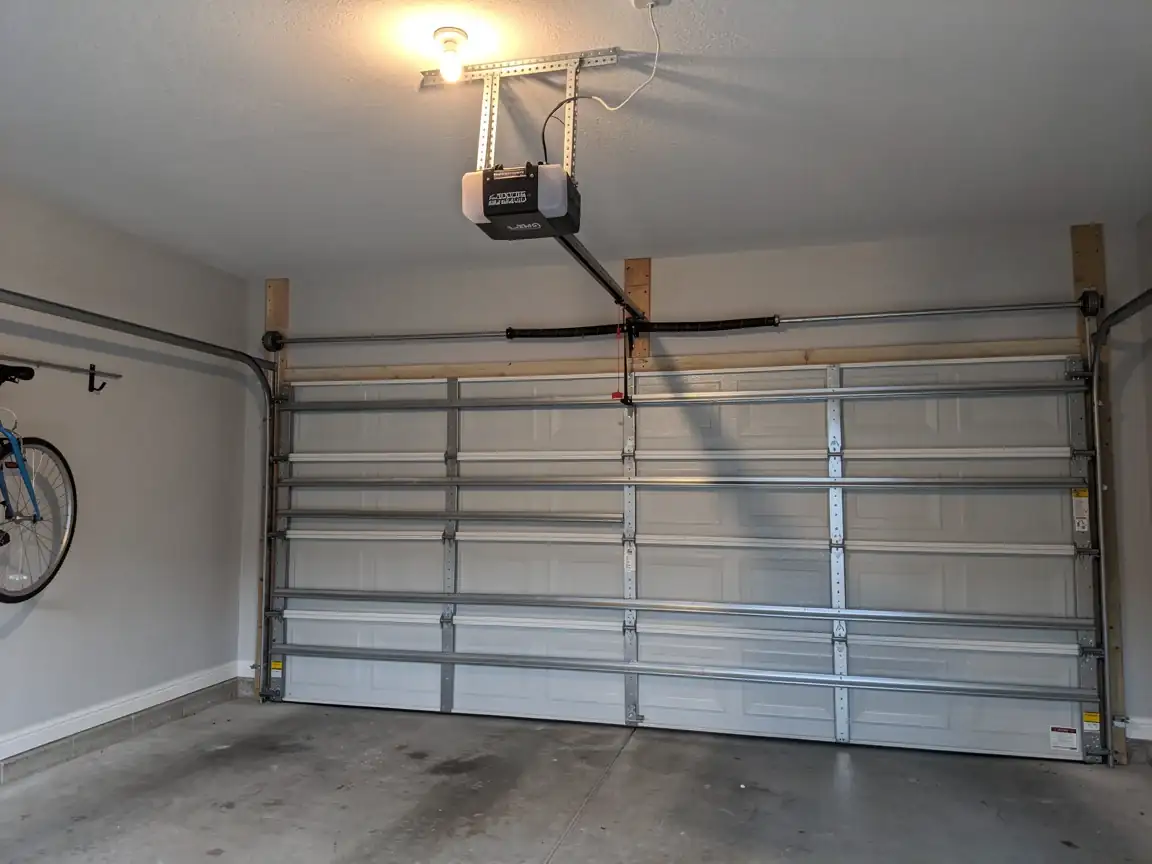
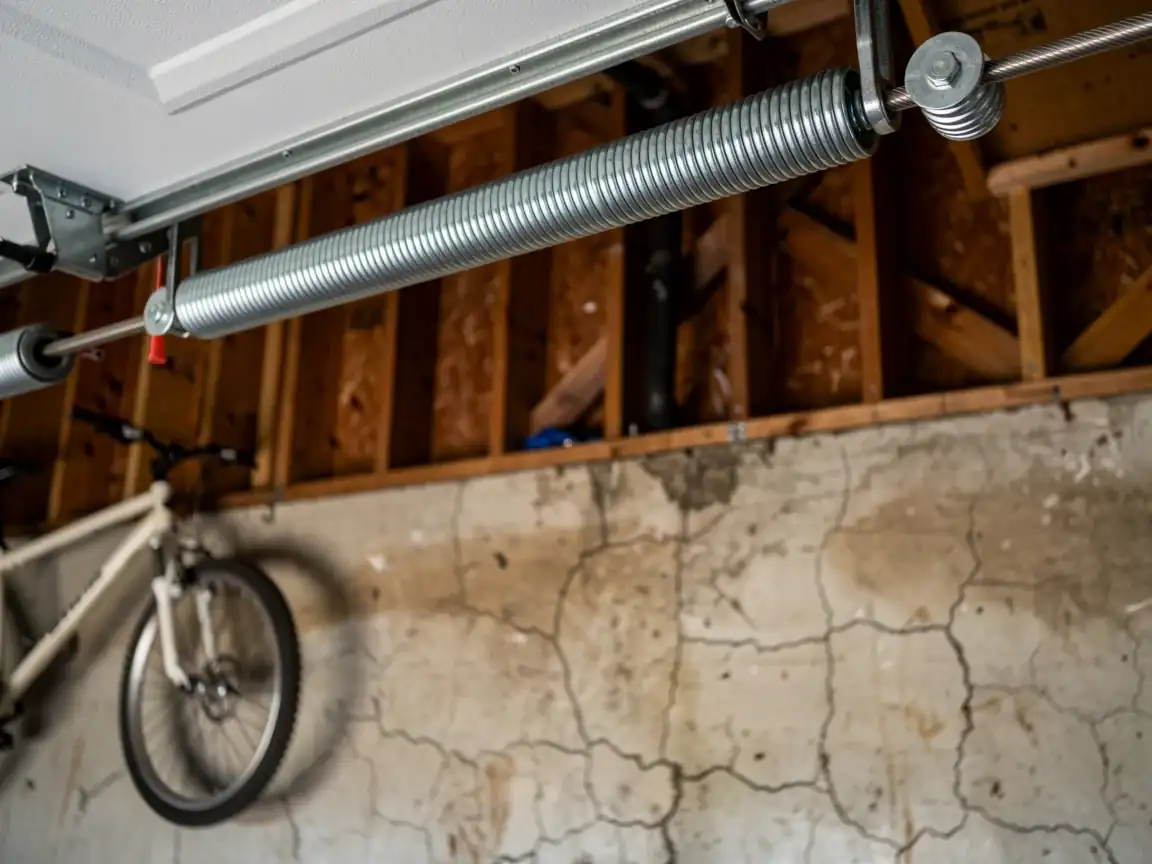
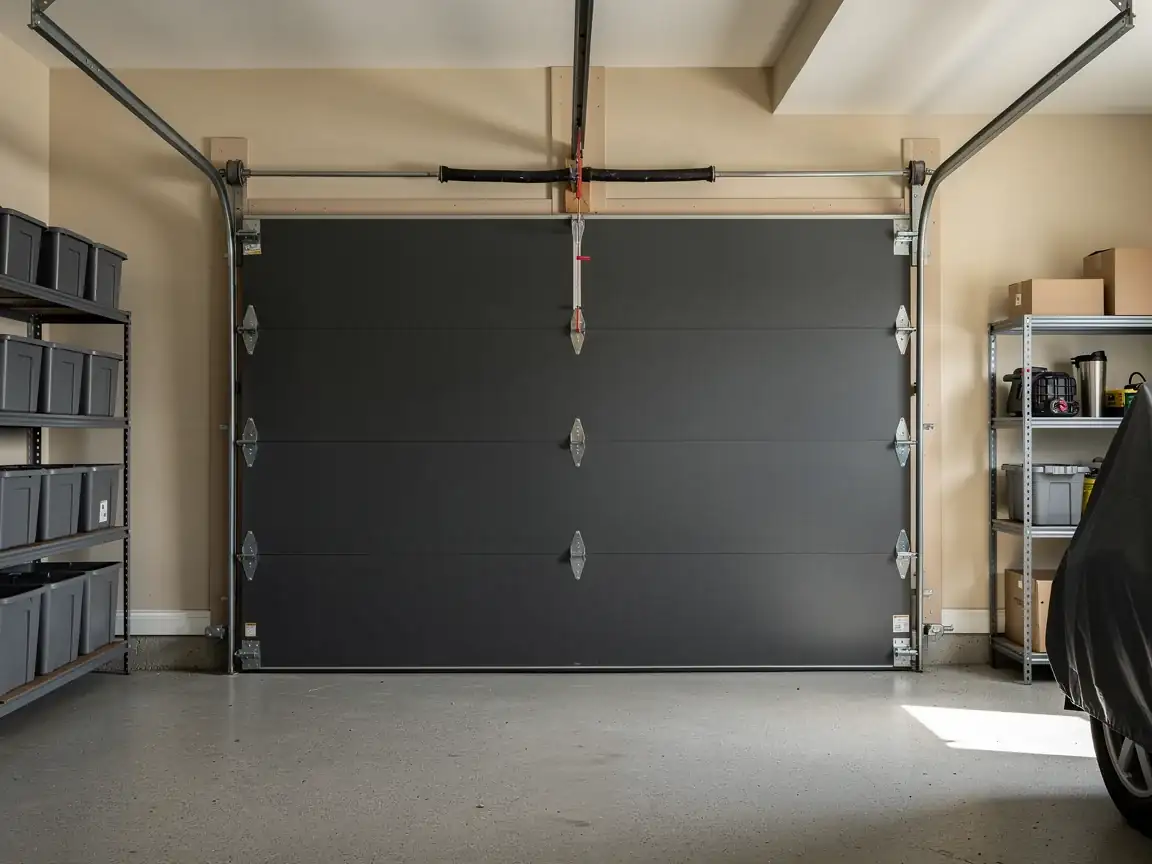
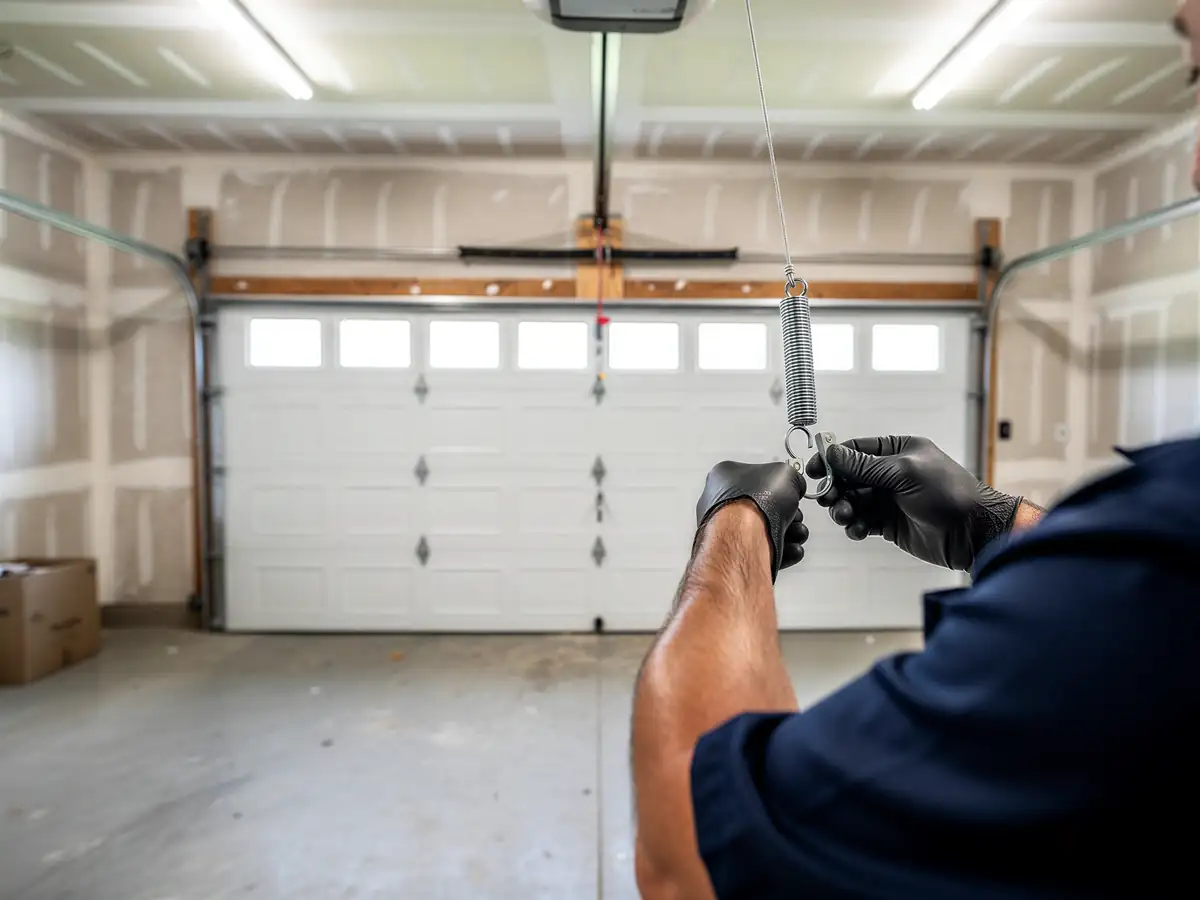
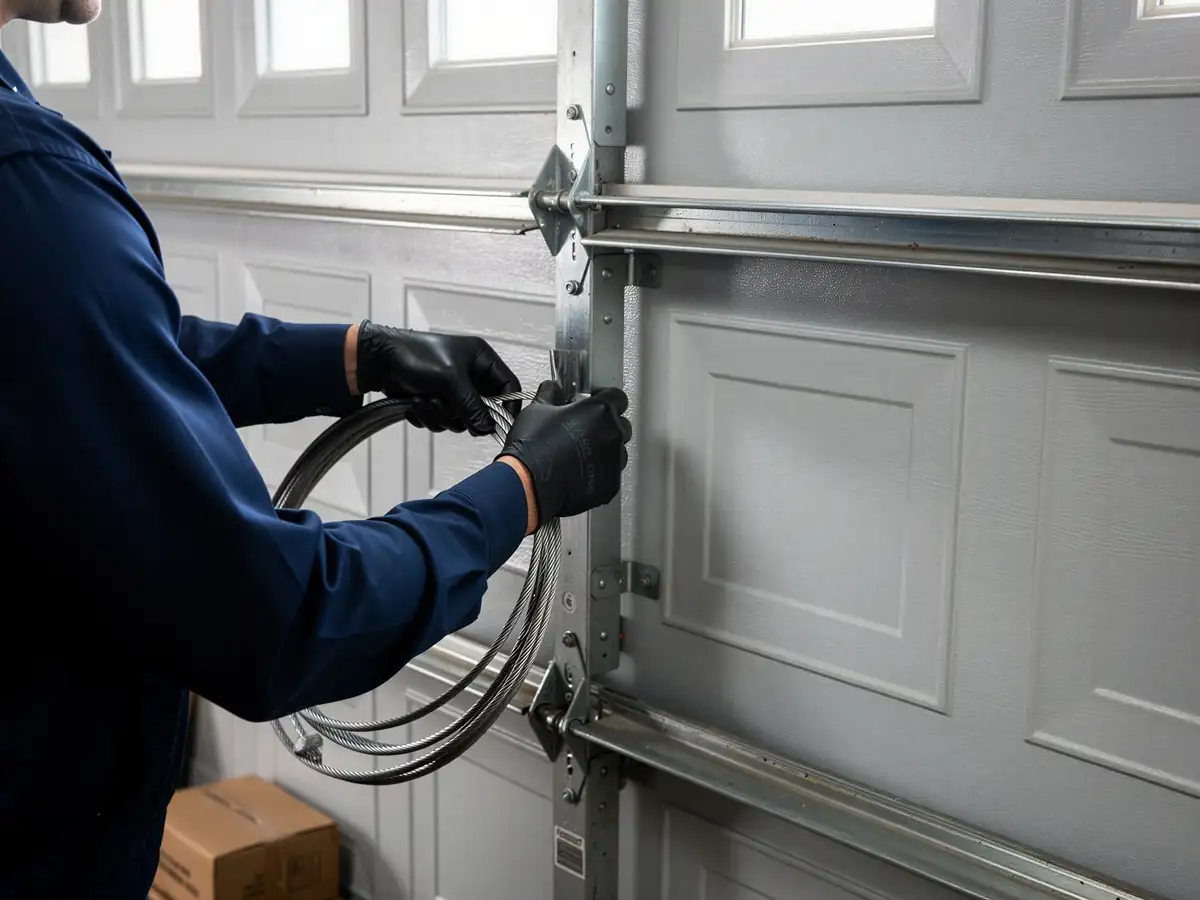
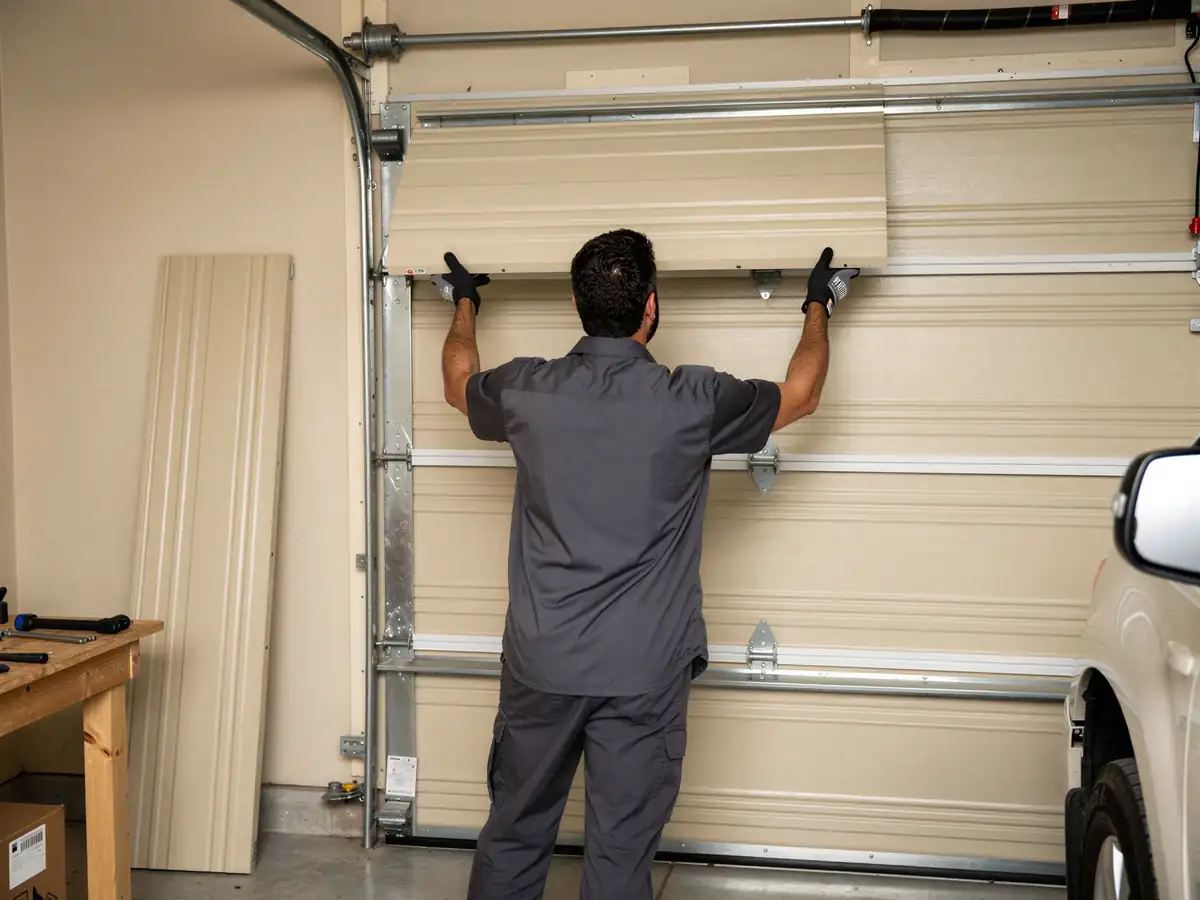
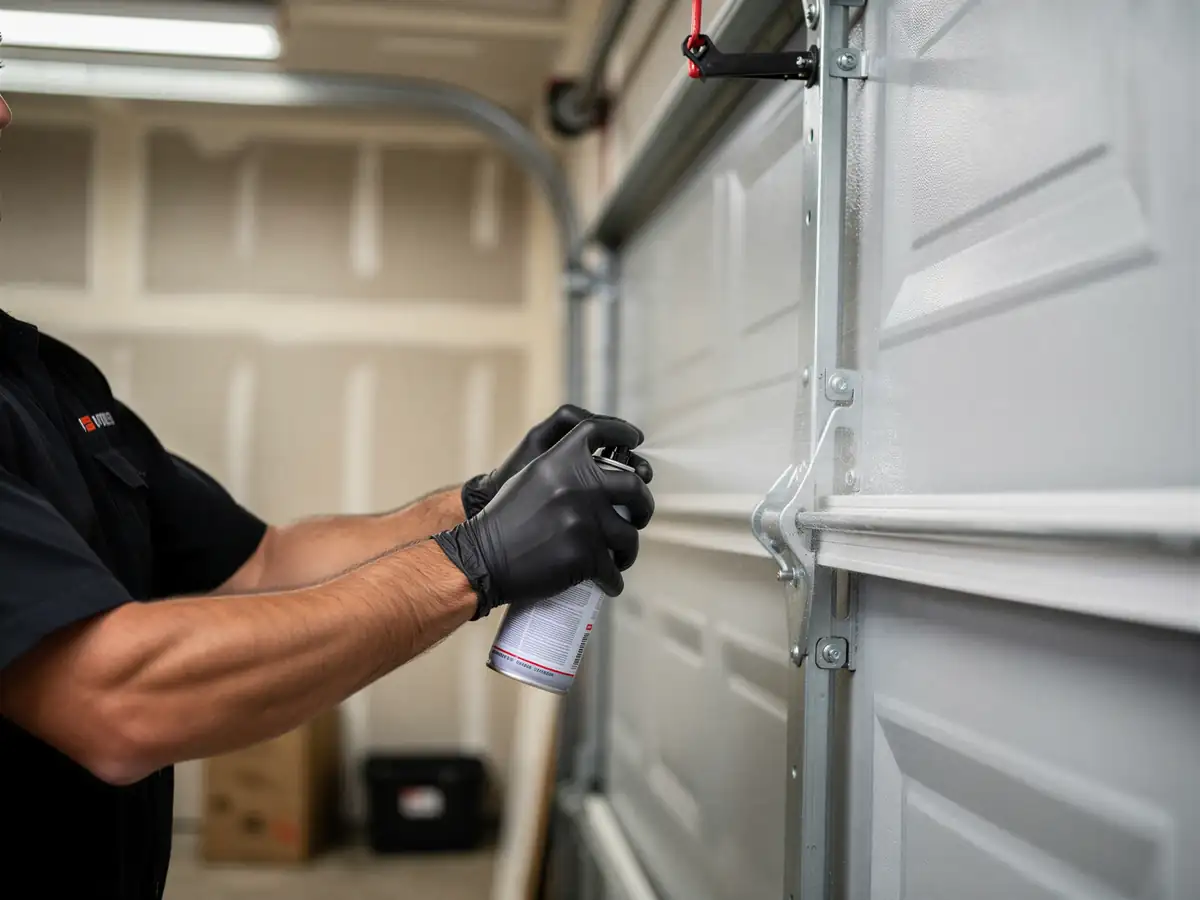
On a lot of New London garages, the giveaway is the track itself: narrow rail, side-mounted torsion hardware bolted directly to wood framing with no steel reinforcement bracket. That's standard for a door from 1968, and it's not a flaw, just a different generation of hardware than what ships today. You'll also see single-layer steel skins with no insulation backing, which in a moderate-heat climate means the garage runs hotter than the rest of the house in summer. If the door is original, the springs have likely been replaced at least once already - torsion springs from that era weren't built to last fifty-plus years - but the track and drums often are original, and that's usually what's actually failing, not the spring.
Doing It Yourself
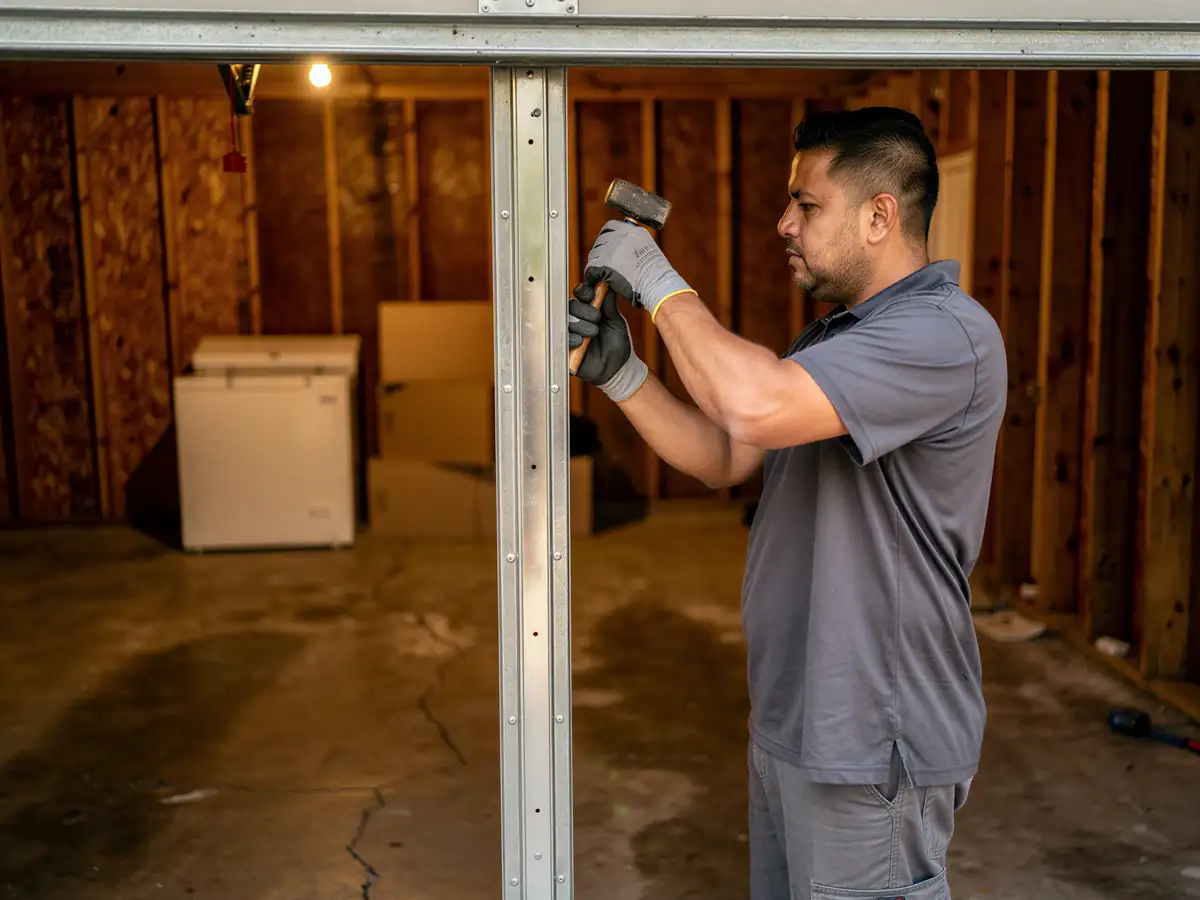
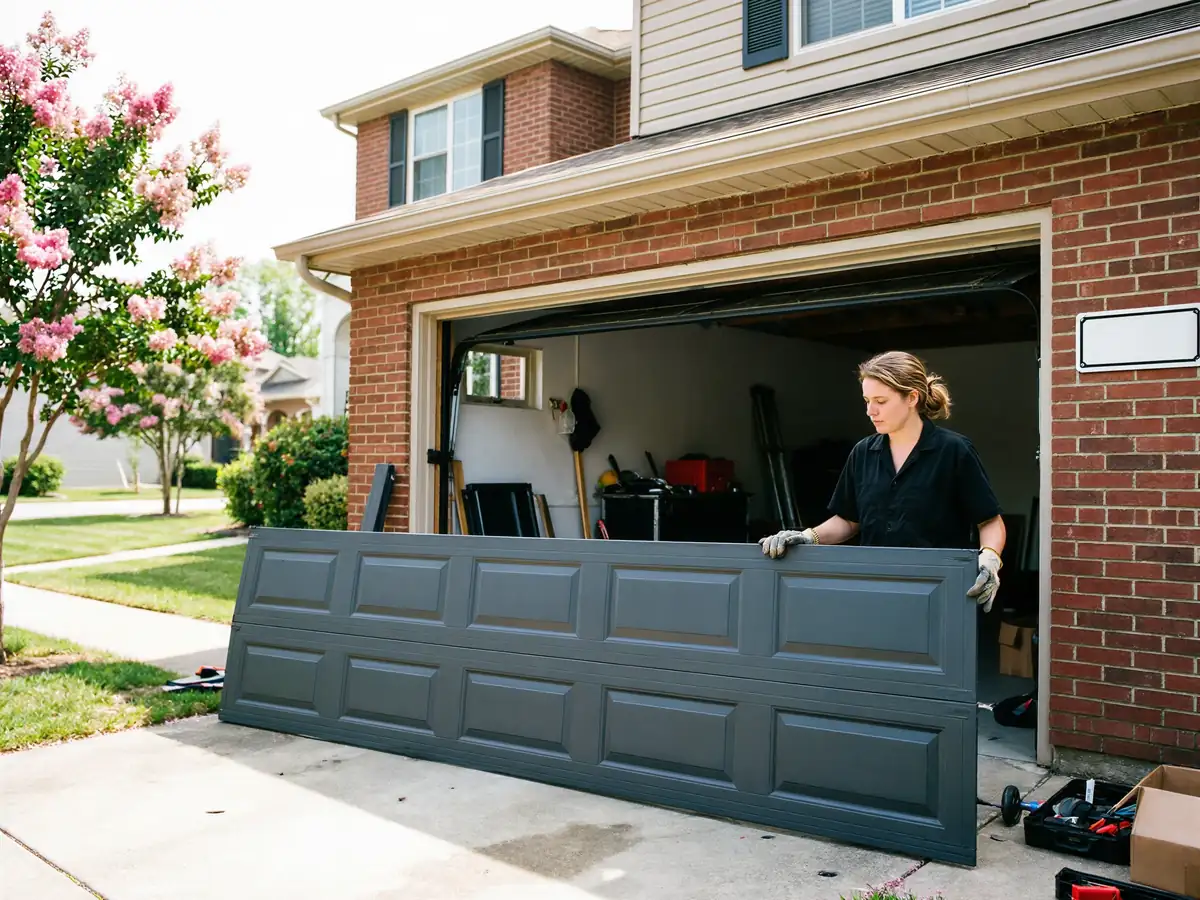
Swapping a garage door yourself is possible if you've done it before and you're replacing like-for-like on a standard-width single door. It's not something we'd recommend on an older 1968-era double door opening, though, because those often need the jamb or header checked for square before a new door will seal and run right - and that's not a one-person job with hand tools. We also won't quote a DIY-assisted install where you've already pulled the old door and hardware; if the opening's altered or damaged in the process, we're starting from a different, more expensive job than the one you called about.